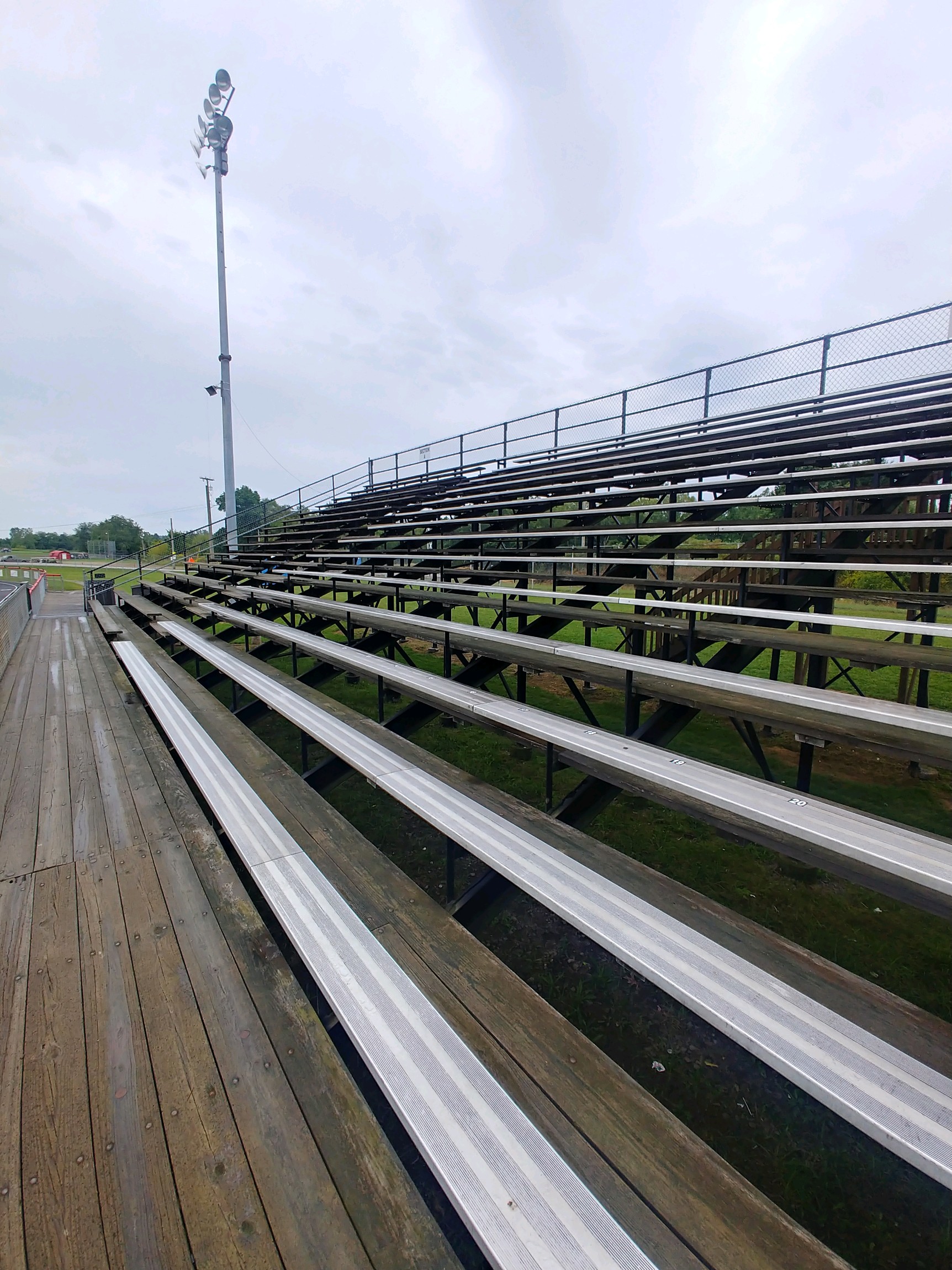
High School Bleachers and Stadium Seating
Football, baseball, softball, soccer and track seating for schools and districts, planned to the budget cycle and the bond timeline.
One district, many venues
The stadium gets the attention, but a district seats people at every field and court. Planning them together keeps planks, colors, rails and maintenance consistent across campus.
| Venue | Typical build |
|---|---|
| Football stadium, home side | GB-E Elevated grandstand with press box |
| Football stadium, visitor side | GB-A Angle Frame or GB-I I-Beam |
| Baseball and softball | GB-A behind the plate and down the lines |
| Track and field | GB-I at the finish line |
| Soccer and lacrosse | GB-A or GB-I along the sideline |
| Gyms and courts | GB-P tip-and-roll units |
Planned around how schools buy
Budget cycles and bonds
We plan to the district’s budget cycle and the bond timeline. When the money comes in phases, build the home side now and have it engineered for the press box and the visitor side later.
Install between seasons
Order early enough that the stand goes up in the off-season and is inspected before the first home game.
Public bids
Specify by performance: rows, length, live load, guard heights and accessible seating, not one maker’s part numbers. The bid stays open and the stand still meets code.
Stretching the line item
Repurposed aluminum systems are re-engineered and installed to the same codes as new, and can be priced next to new on the same quote.
What inspectors look for on school bleachers
- Engineered to the International Building Code and ICC 300, with stamped drawings by a professional engineer licensed in your state
- Guardrails wherever the footboard, seat or aisle is more than 30 inches above the ground
- Openings that stop a 4-inch sphere in guards and between footboards, seats and risers
- Aisles, handrails and stairs sized to the crowd
- Accessible seating with companion seats, dispersed and on an accessible route, per the 2010 ADA Standards
Then an annual inspection to keep it that way.
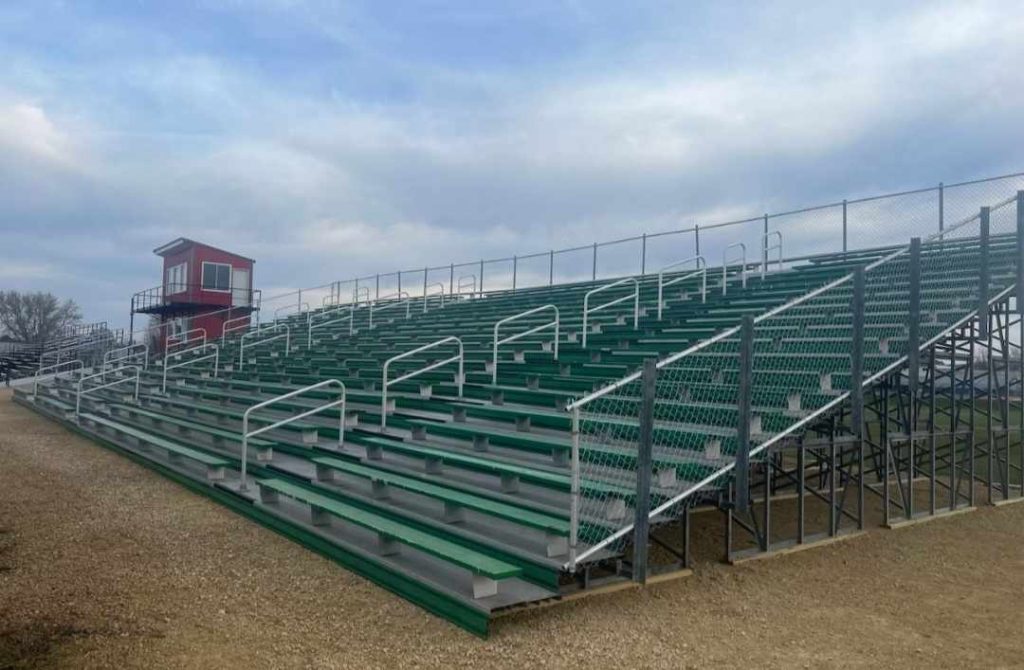
High school bleacher questions
How long do aluminum bleachers last?
Decades, with an annual inspection and routine maintenance. Aluminum does not rot or rust, and planks, rails and hardware can be replaced as they wear.
Can you replace our old bleachers?
Yes. We take old stands down and replace them. If the old stand is aluminum, we may buy it or credit it against the new one.
Can we phase the project over several budget years?
Yes. Have the full build engineered up front, then build it in phases: home side first, press box or visitor side later.
Do you install, or just supply?
We plan, engineer, fabricate, deliver and install, and we come back for annual inspections, parts, retrofits and additions.
How much do high school bleachers cost?
Rows, length and height drive most of it; press boxes, chairs, foundations and site work are the next tier. Our cost guide breaks it down, and a quote takes the site, the sport and the crowd.
How do schools buy bleachers?
Usually through a competitive bid, quotes under the district’s threshold or a cooperative contract. See how schools and public agencies buy bleachers, and bleacher funding and grants for paying for them.
Planning guides
- Bleacher safety codes explained
ICC 300 in plain language: guardrails, the 4-inch rule, aisles and egress.
- Accessible seating
How many wheelchair spaces, where they go and how fans reach them.
- What drives the cost of a grandstand
Rows, length and height matter most; press boxes, chairs, foundations and site work are the next tier.
Planning seating for your district?
Tell us the venues, the crowds and the budget timeline. We will come back with layouts, series recommendations and numbers you can take to the board.