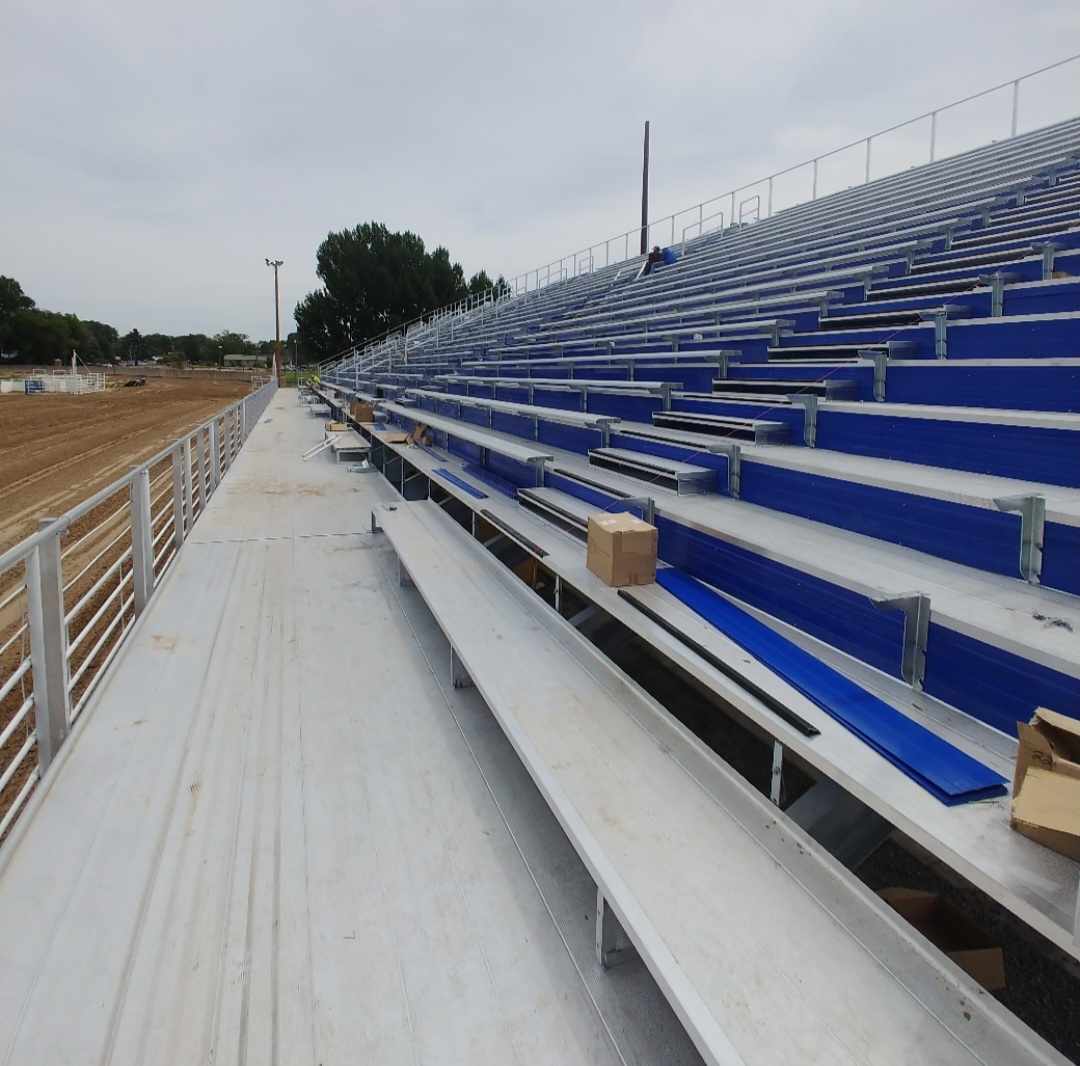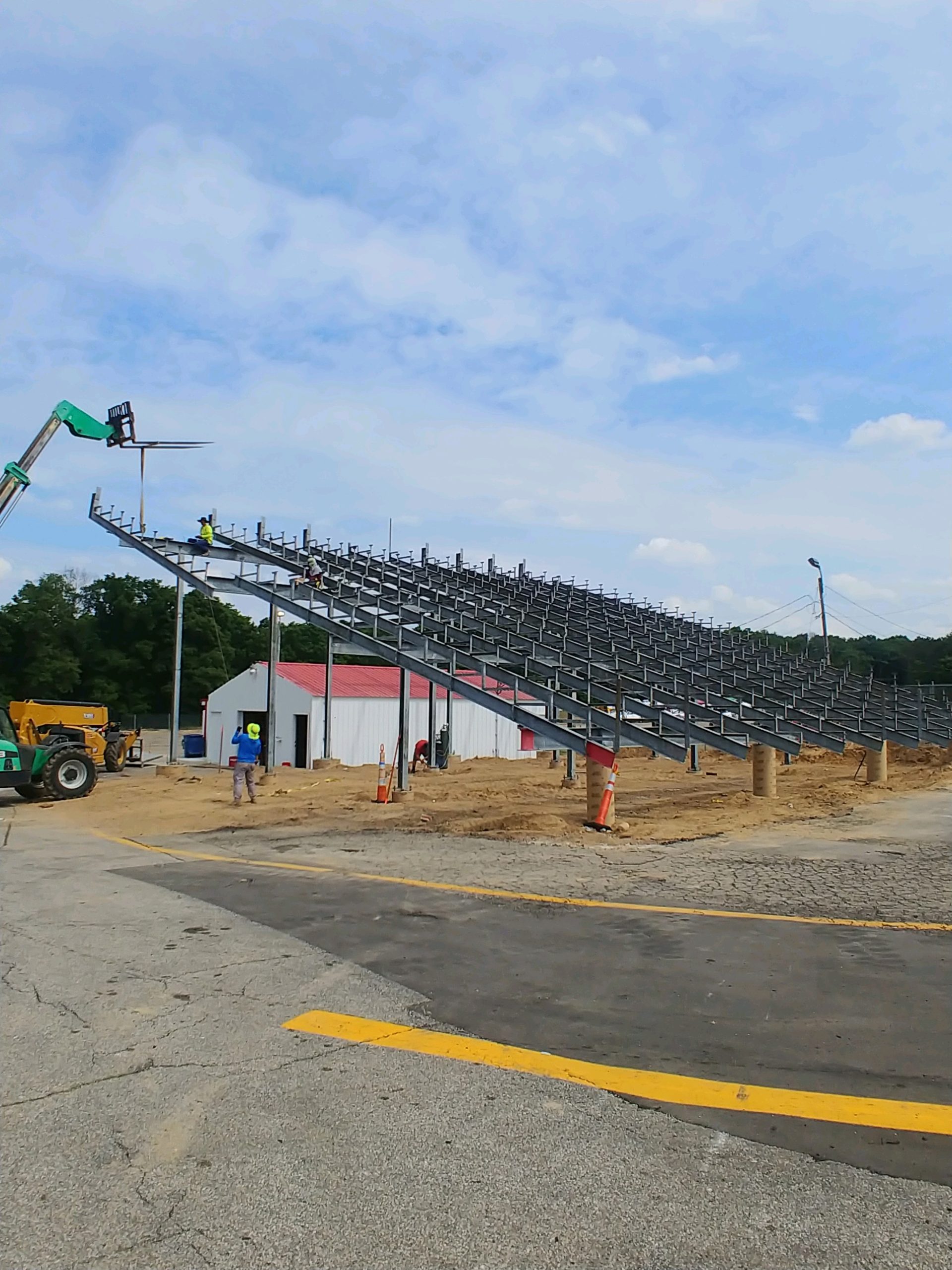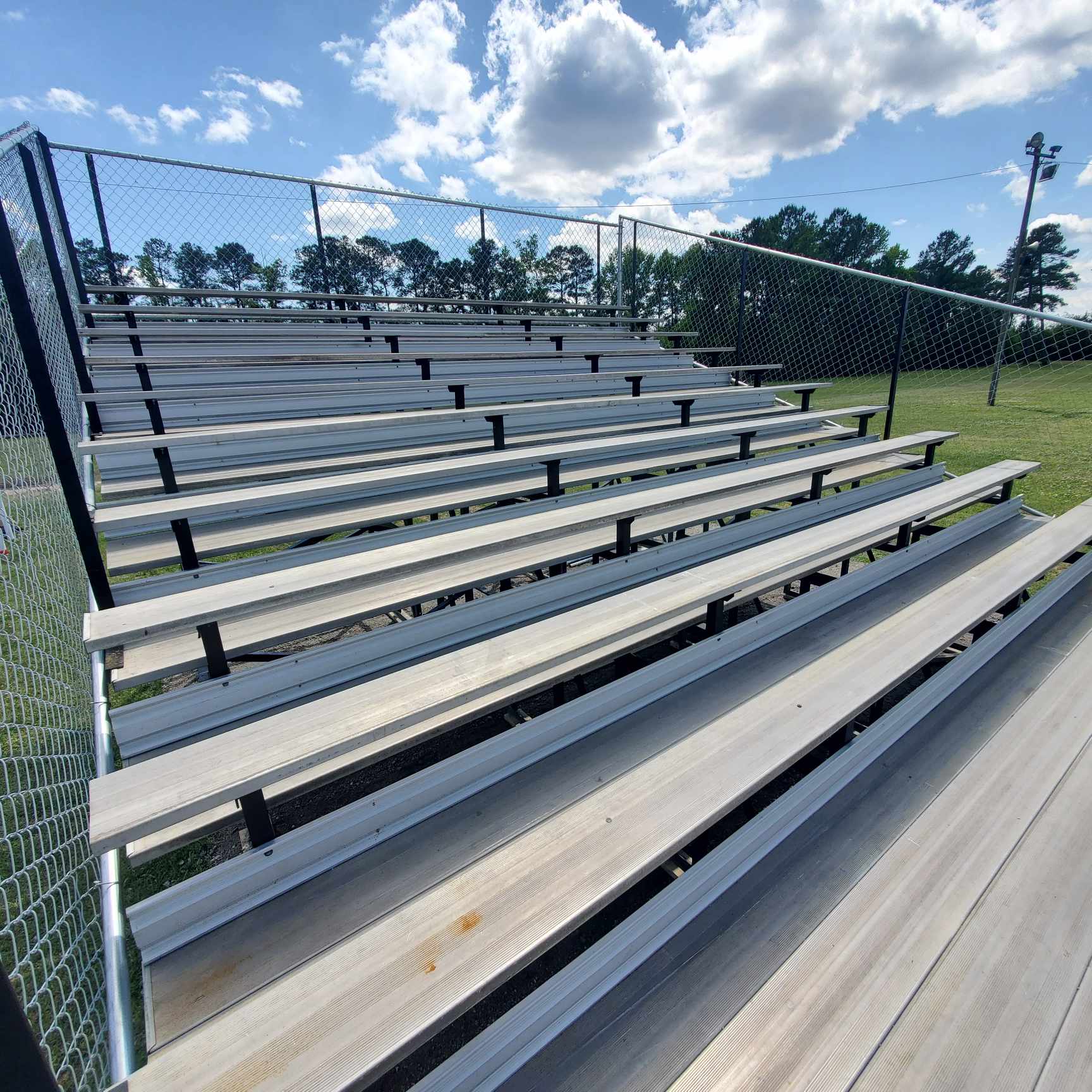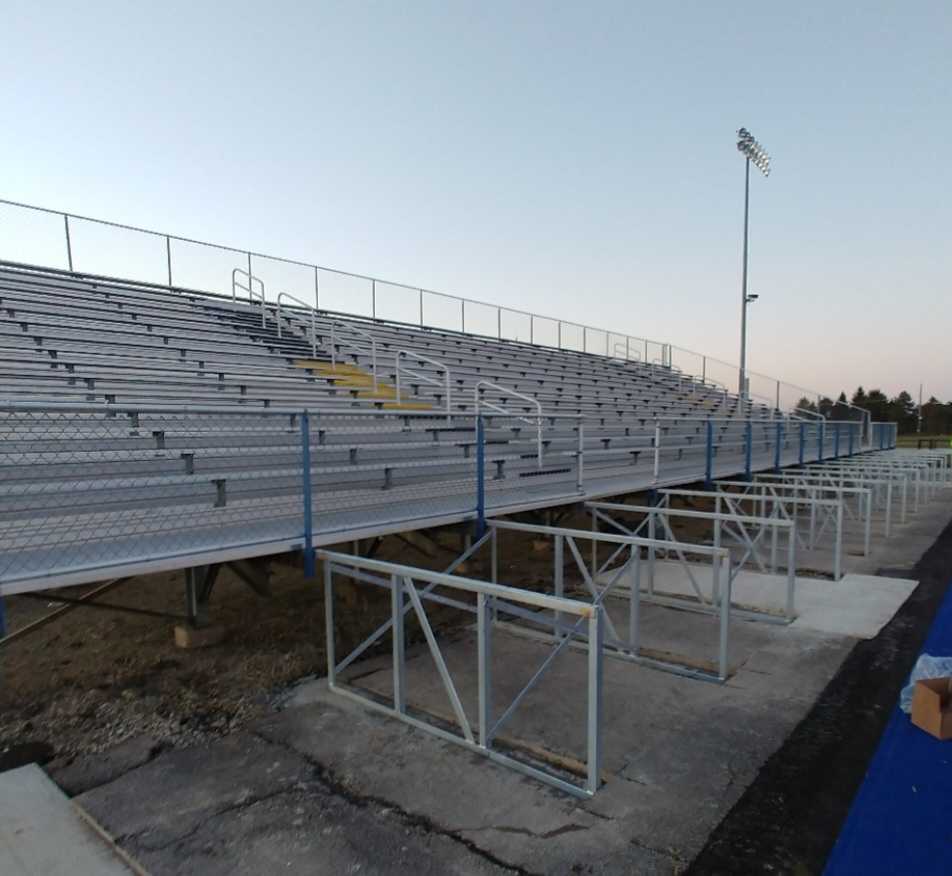
An aluminum stand on a galvanized frame will outlast the program that bought it, but only if someone walks it once a year. ICC 300 calls for an annual inspection of existing bleachers by a qualified person, several states require it by law, and your insurer may ask for the report. Here is what the inspection covers and what to do between them.
The annual inspection
Structure
- Every column, stringer and brace: cracked welds, bent members, impact damage from mowers and vehicles.
- Fasteners: loose, missing or corroded bolts, especially at guard posts, stair connections and column bases. Locking hardware that has backed off gets replaced, not retightened.
- Footings and anchor bolts: settlement, heave, cracked concrete, washed-out soil, anchor bolts out of plumb.
- Galvanic corrosion where aluminum meets steel. Isolators between the two metals should be intact; white powder or pitting at the contact points is the warning sign.
Seating and decking
- Planks: cracks, deflection under load, worn or missing end caps, loose clips.
- Footboards: non-slip surface intact, no gaps opening between boards.
- Riser closures in place and secure wherever the footboard is more than 30 inches above grade.
- Chairs: broken seats and backs, loose mounts, missing numbers.
Guards, rails and stairs
- Guard height (42 inches) and openings (the 4-inch and 8-inch sphere rules) along the whole perimeter.
- Guard and handrail attachment: grab and push every section. Loose guards are the most dangerous defect on a stand.
- Aisle steps and stairs: uniform risers, treads intact, handrails continuous and secure.
- Gates, ramps and lifts on the accessible route working and clear.
On top and underneath
- Press box: roof, windows, doors, roof deck guard, ladder or stair, lightning protection connections.
- Electrical: conduit, boxes and fixtures secure and weather-tight; GFCI protection on outdoor receptacles.
- Under the stand: drainage, debris, nesting, storage that has crept into the structure, and anything stacked against a column.
Confirm the posted capacity still matches the stand (sections added or removed, chairs installed) and that accessible seating signage is in place. A stand that has been altered without updated drawings needs an engineer’s review, not just an inspection.
Between inspections
- After storms and after any big event, walk the stand before the next crowd: look for debris, loose planks, damaged guards.
- Keep it clean. Aluminum needs nothing more than a pressure wash. Keep the area under the stand clear and mowed, and keep vehicles off the footings.
- Fix small things immediately. A loose bolt or a missing end cap takes ten minutes now and a closed section later.
- Keep the records. The stamped drawings, the inspection reports and every repair, in one folder. The next athletic director will thank you, and so will the inspector.
Keep an inspection record
Print this page and walk the stand with it. Write down every finding, who found it and when it was fixed, and keep the record with the drawings. Insurers, building officials and the next inspector may ask to see it.
| Date | Inspector | Section or area | Finding | Action taken and date |
|---|---|---|---|---|
When to call us
Anything structural, any guard or closure that no longer meets the code, settlement, or an alteration you want to make. We inspect stands we did not build, write the report, and do the retrofits: closures, guards, planks, stairs, press boxes and additions. Older stands are usually a day or two from fully compliant. Schedule an inspection.