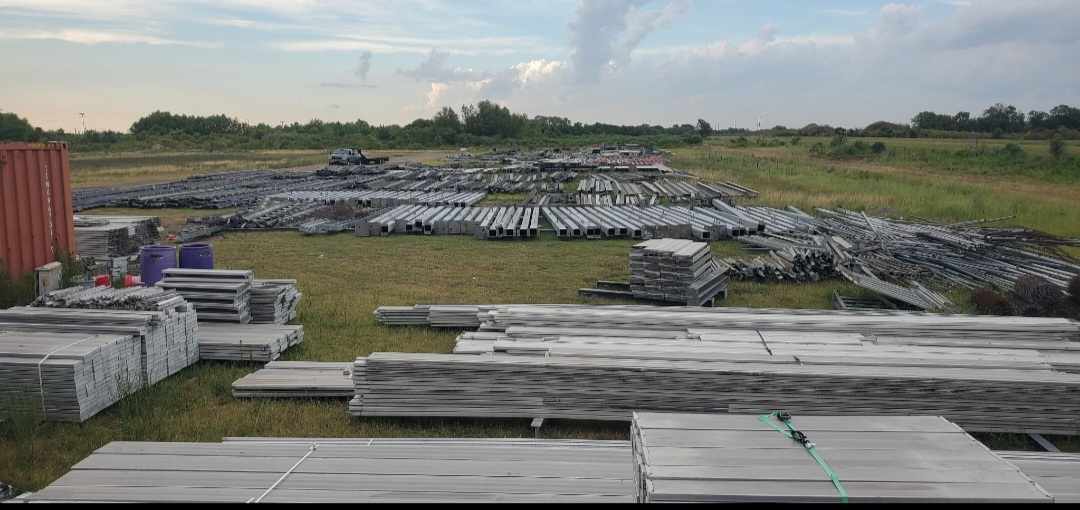
Bleacher Renovation, Replanking and Repairs
Rebuild the decking and rails, add rows or sections, replace a press box, bring an old stand up to today’s safety standards, or take it down and credit it against a new one.
What we do on existing stands
Most of a stand’s cost is in the frame and the foundations. When those are sound, renovating what people touch is the fastest, cheapest way to get a stand back in service and up to code.
- Replanking: new aluminum seat, foot and riser planks on the existing frame
- Safety retrofits: guardrails, riser closures and gaps closed to current standards
- Additions: rows, sections and press boxes added to a stand you already own
- Relocations: stands taken down, moved and re-erected on a new site
- Inspections and parts: annual inspections, replacement planks and parts, and repairs
- Take-down and credit: stands past saving removed and credited against a new one
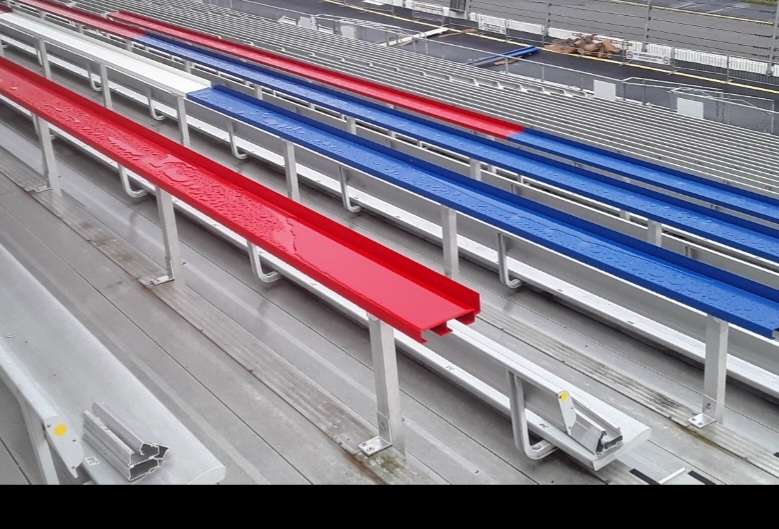
Repair, retrofit or replace?
The frame decides. We walk the understructure before anyone prices planks: welds and connections, bent or rusted members, base plates and footings.
| What we find | What usually makes sense |
|---|---|
| Sound frame, worn planks | Replank |
| Sound frame, no back guards or open risers | Replank and retrofit guards and risers in the same job |
| A few damaged braces or connections | Repair those members, then replank |
| Cracked welds, section loss or moved footings | Replace the frame, or the whole stand |
| Stand too small, no accessible route, needs a press box | Price an addition or a new stand alongside the renovation |
Safety upgrades that come with the job
Older stands often predate today’s expectations. The U.S. Consumer Product Safety Commission’s Guidelines for Retrofitting Bleachers set them out plainly:
- Guardrails on the back and open ends wherever the footboard, seat or aisle is 30 inches or more above the ground
- Guardrails at least 42 inches above the leading edge of the footboard, seat or aisle
- Openings that stop a 4-inch sphere, in guardrails and between footboards, seats and risers
- No ladder-like infill a child can climb
Renovation is the cheapest time to fix them, because the decking is already off.
How a renovation runs
- Inspect. We walk the frame, the seating, the guards and the footings.
- Measure and draw. Frame spacing, rows, rise and run set the plank lengths and the retrofit details.
- Schedule the off-season. The stand is out of service only while the crew is on it.
- Rebuild. Planks, risers, guards, rails and hardware, new or refurbished.
- Inspect and hand off. Final inspection, punch list and a maintenance guide for the facilities team.
Renovation questions
Is it cheaper to replank or replace?
When the frame is sound, replanking costs a fraction of a new stand because the frame and foundations stay. When the frame has cracked welds, section loss or moved footings, the repair can cost as much as a new frame, and replacement usually wins.
Can you add rows or sections to our bleachers?
Yes. We add rows and sections to existing stands, matching the row spacing and seat height so the new seating lines up with the old.
Can you move a grandstand to a new site?
Yes. We take stands down, move them and re-erect them, engineered for the new site and its foundations.
Do you do annual inspections?
Yes, along with replacement parts and repairs for the life of the stand. Our inspection checklist shows what the yearly walk-through covers.
What happens to our old stand?
Aluminum keeps its value. We buy aluminum seating from facilities that are closing or upgrading, and we can take your old stand down and credit it against a new one.
Planning guides
- Annual inspection and maintenance
The yearly checklist that keeps a stand safe, insurable and in service for decades.
- Bleacher safety codes explained
ICC 300 in plain language: guardrails, the 4-inch rule, aisles and egress.
- New or repurposed aluminum?
When refurbished seating is the smarter buy, and what we check before a plank is reused.
- What to do with old bleachers
Renovate, relocate, sell or scrap: how to decide what happens to an old stand.
Tell us about your stand.
Rows, length, what it is made of and what is wrong with it. Mention if you have photos and we will send a secure upload link.