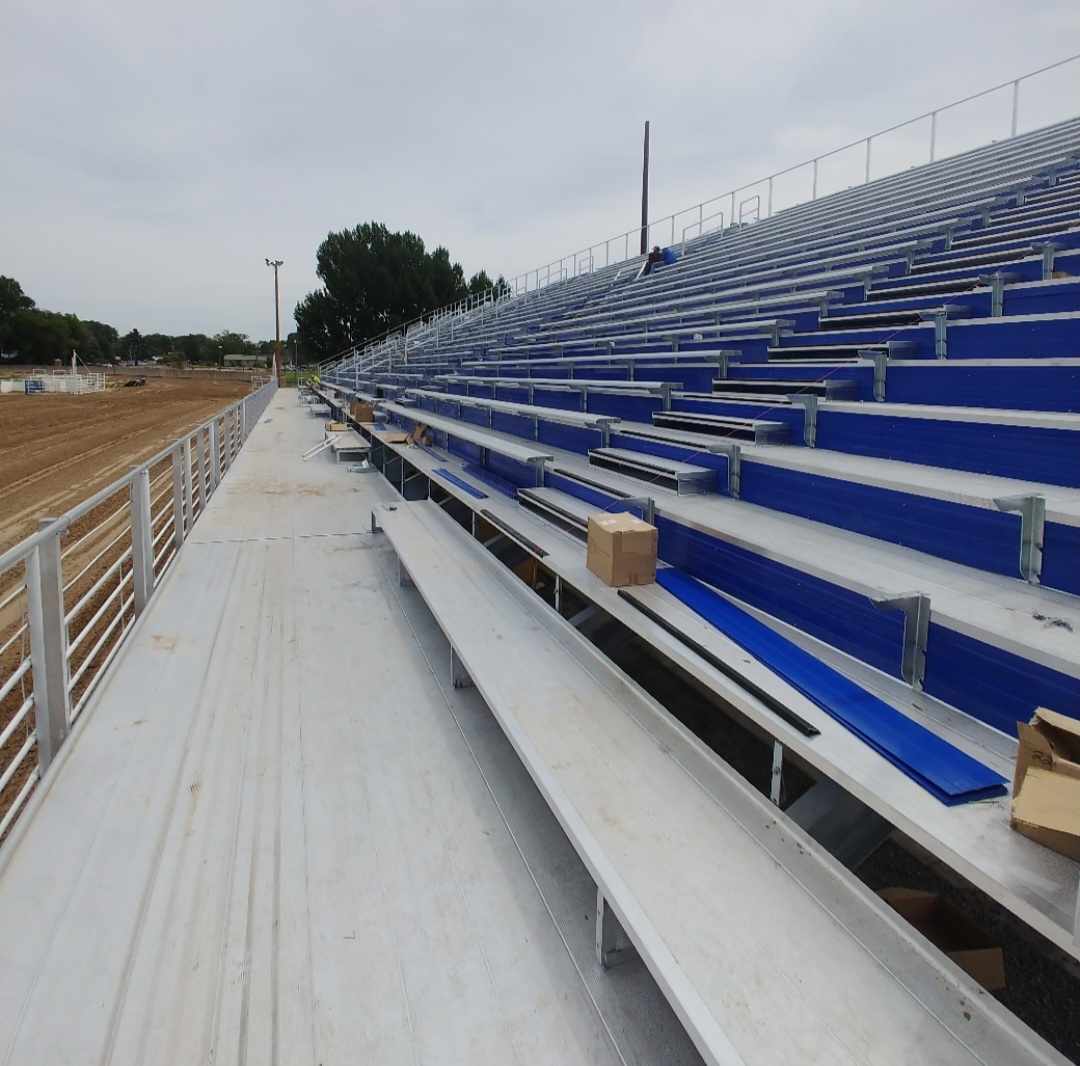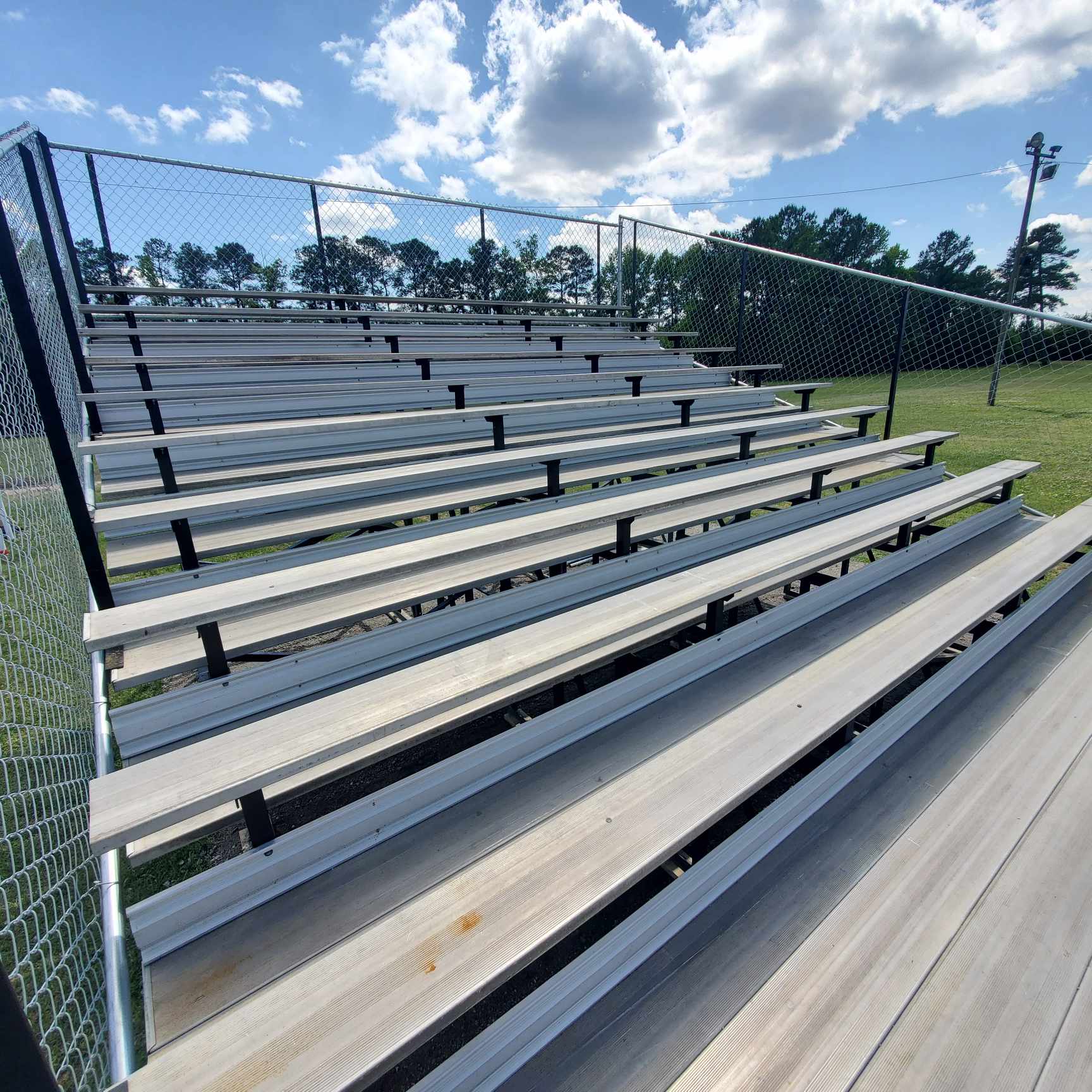
Plenty of stands are older than the people sitting in them. The planks wear out first: wood splinters and rots, painted steel rusts through, and old aluminum gets dented, loose and short on end caps. Replanking puts new aluminum seat, foot and riser planks on the frame you already own, at a fraction of the cost of a new stand.
Done on a sound frame, it can keep a stand in service for many more seasons. Done on a frame that is failing, it is money spent on top of a problem. Here is how to tell which one you have.
What replanking includes
A replanking job takes the stand down to its understructure and rebuilds everything people touch:
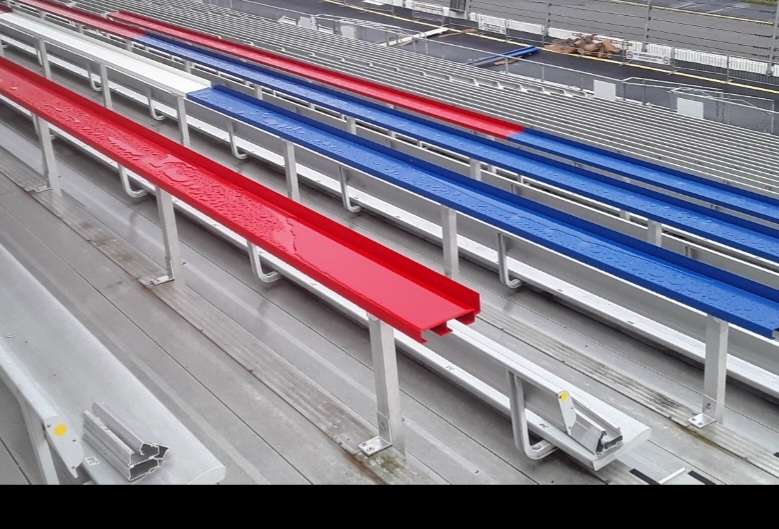
- Seat planks: new extruded aluminum benches, usually clear-anodized or powder-coated in your colors.
- Footboards and treads: new aluminum decking, with a non-slip surface.
- Risers: closures between rows, which older stands often never had.
- Hardware and end caps: new clips, fasteners and caps, so nothing sharp is left at the ends of the rows.
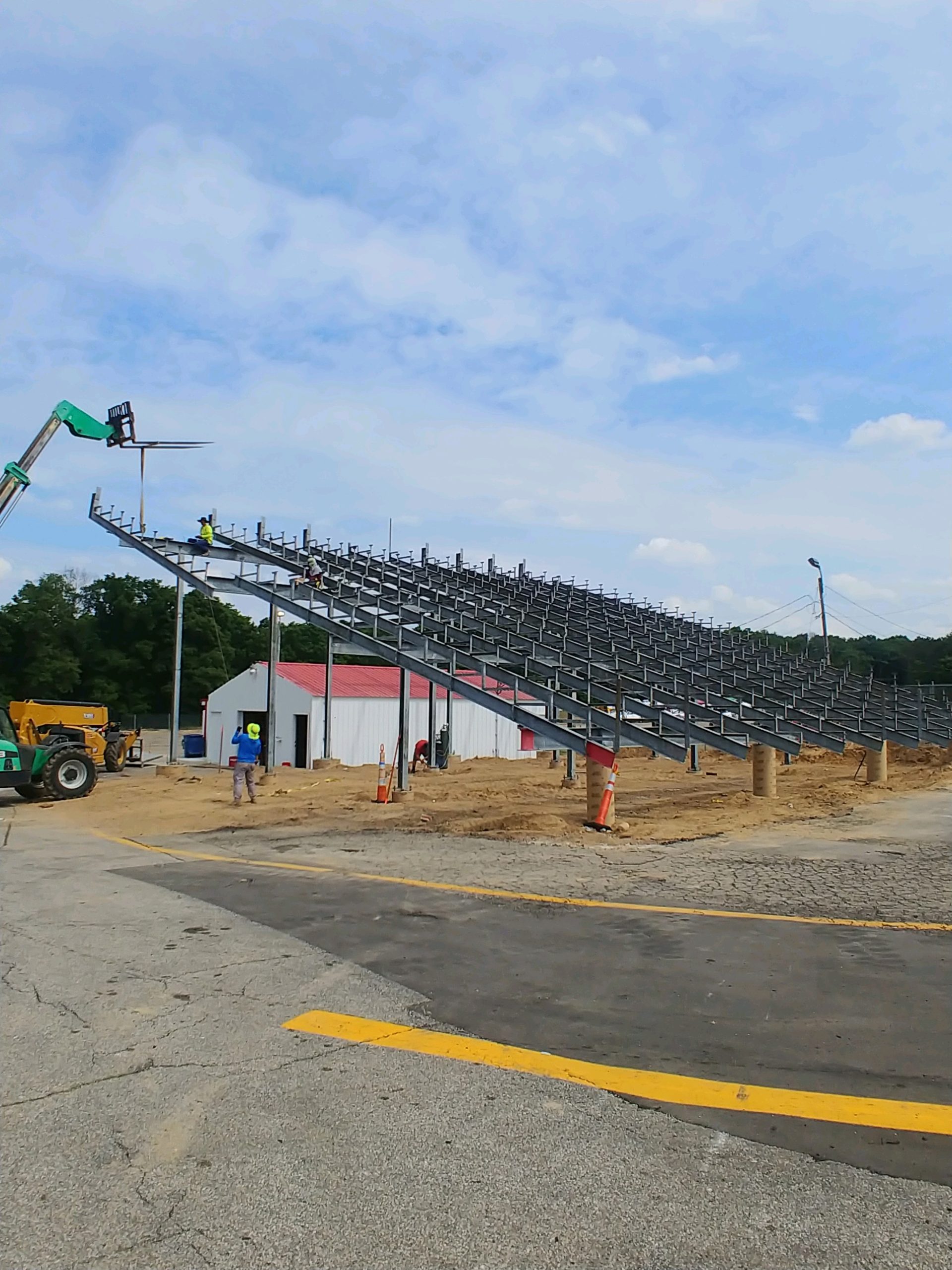
The columns, stringers and bracing stay. That is where the savings come from, and it is why the frame has to be checked before anyone orders a plank. Doing the work yourself? We also sell planks and parts on their own.
Signs the planks are done
- Wood that splinters, checks, rots or has termite damage
- Steel planks rusting where the paint or powder coat has worn through
- Aluminum planks that are cracked, split, sagging between supports or rocking on their clips
- Missing end caps and sharp plank ends
- Gaps between footboards and seats wide enough to drop a phone, or a child’s foot, through
Any one of these on a stand with a good frame is a replanking candidate.
The frame decides
Walk the understructure before you price planks. A qualified inspector looks at the same things we do:
- Welds and connections: cracks at welds, loose or missing bolts at the braces and column caps.
- Members: bent columns or braces, usually from mowers and vehicles, and any section loss from rust.
- Base plates and footings: rust where water sits at the base, anchors that have pulled loose, footings that have settled or heaved.
- Finish: a galvanized frame with sound coating is a good sign; a painted steel frame with flaking paint and rust scale needs a closer look.
If the frame is straight, tight and sound, replank. If it has cracked welds, real section loss or footings that have moved, the repair can cost as much as a new frame, and replacement usually wins. Our annual inspection checklist covers the full walk-through.
Replanking is when the safety upgrades happen
A stand that met the rules when it was built may not meet today’s. Since the U.S. Consumer Product Safety Commission published its Guidelines for Retrofitting Bleachers, the expectations for older stands have been clear:
- Guardrails on the back and open ends wherever the footboard, seat or aisle is 30 inches or more above the ground.
- Guardrail height of at least 42 inches above the leading edge of the footboard, seat or aisle next to it.
- Openings in guardrails, and between footboards, seats and risers where someone could fall 30 inches or more, small enough to stop a 4-inch sphere.
- Chain-link guard mesh of 1.25 inches or smaller, and no ladder-like infill a child can climb.
Many older stands have open risers and no back guard at all. Replanking is the cheapest time to fix that, because the decking is already off. Plan the risers and guards into the same job. Our guide to bleacher safety codes explains what the inspector will look for.
Altering a stand can also bring accessibility requirements into play. Ask your building department early, and see accessible seating in bleachers and grandstands for how wheelchair and companion spaces are counted.
Replank, retrofit or replace
| Condition | What usually makes sense |
|---|---|
| Sound frame, worn planks | Replank |
| Sound frame, no back guards or open risers | Replank and retrofit guards and risers in the same job |
| A few damaged braces or connections | Repair those members, then replank |
| Cracked welds, section loss or moved footings | Replace the frame, or the whole stand |
| Stand is too small, has no accessible route or needs a press box | Price a new or expanded stand alongside the replank |
Getting the most from the job
- Measure before you order. Frame spacing, row count, rise and run decide plank lengths and clip types. A survey of the existing stand comes first.
- Schedule it for the off-season. A replank is fast compared with a new stand, but it still takes the stand out of service.
- Decide on extras now. Colored seat planks, row numbers, a reserved chair section or backrests are easiest to add while the stand is open.
- Consider refurbished planks. Aluminum does not wear out the way wood and steel do. Repurposed aluminum, inspected and re-engineered, can bring the cost down further.
We rebuild decking and rails on existing stands, add rows and sections, replace press boxes, and take down stands that are past saving and credit them against the new one. Tell us about your stand and we will tell you which side of the line it is on.