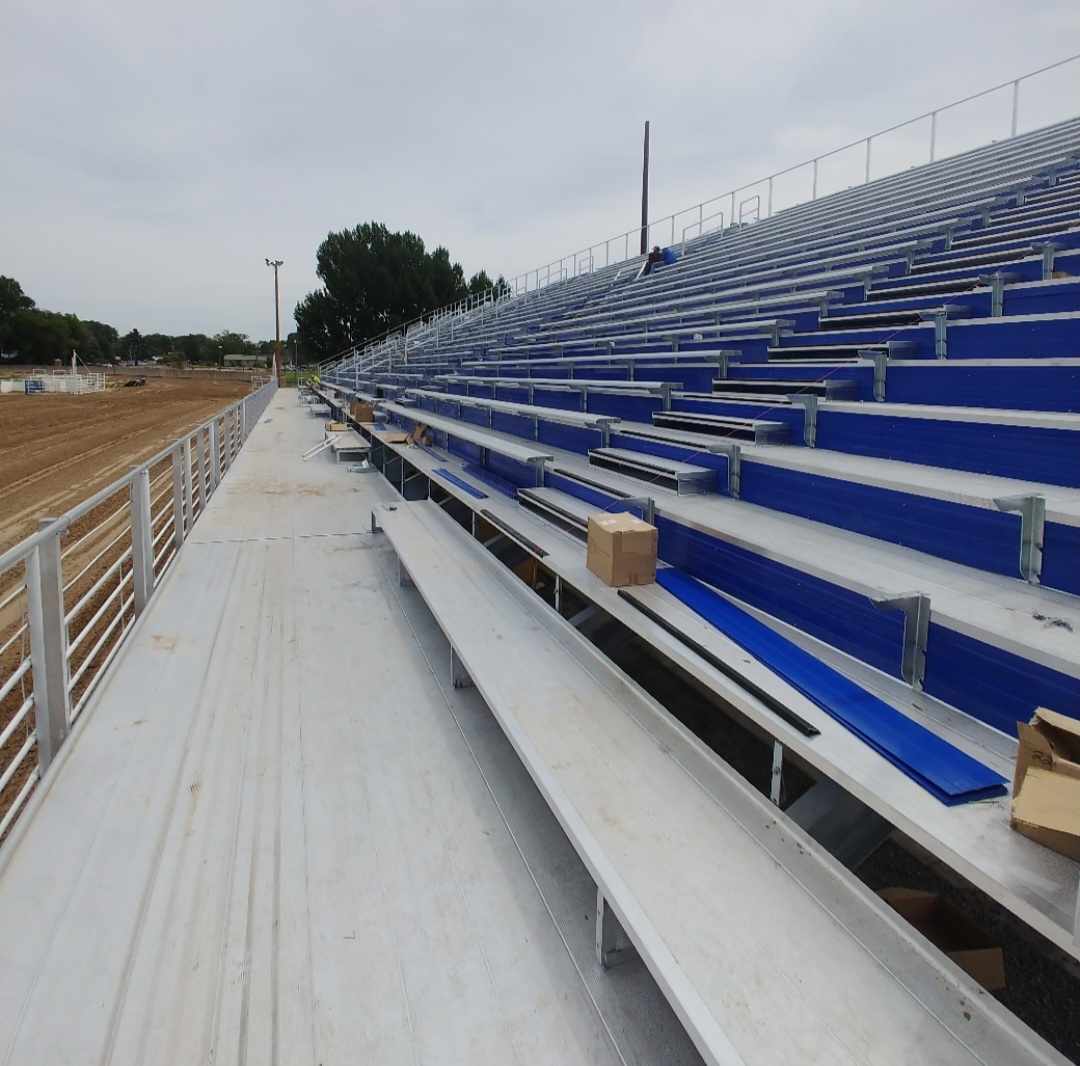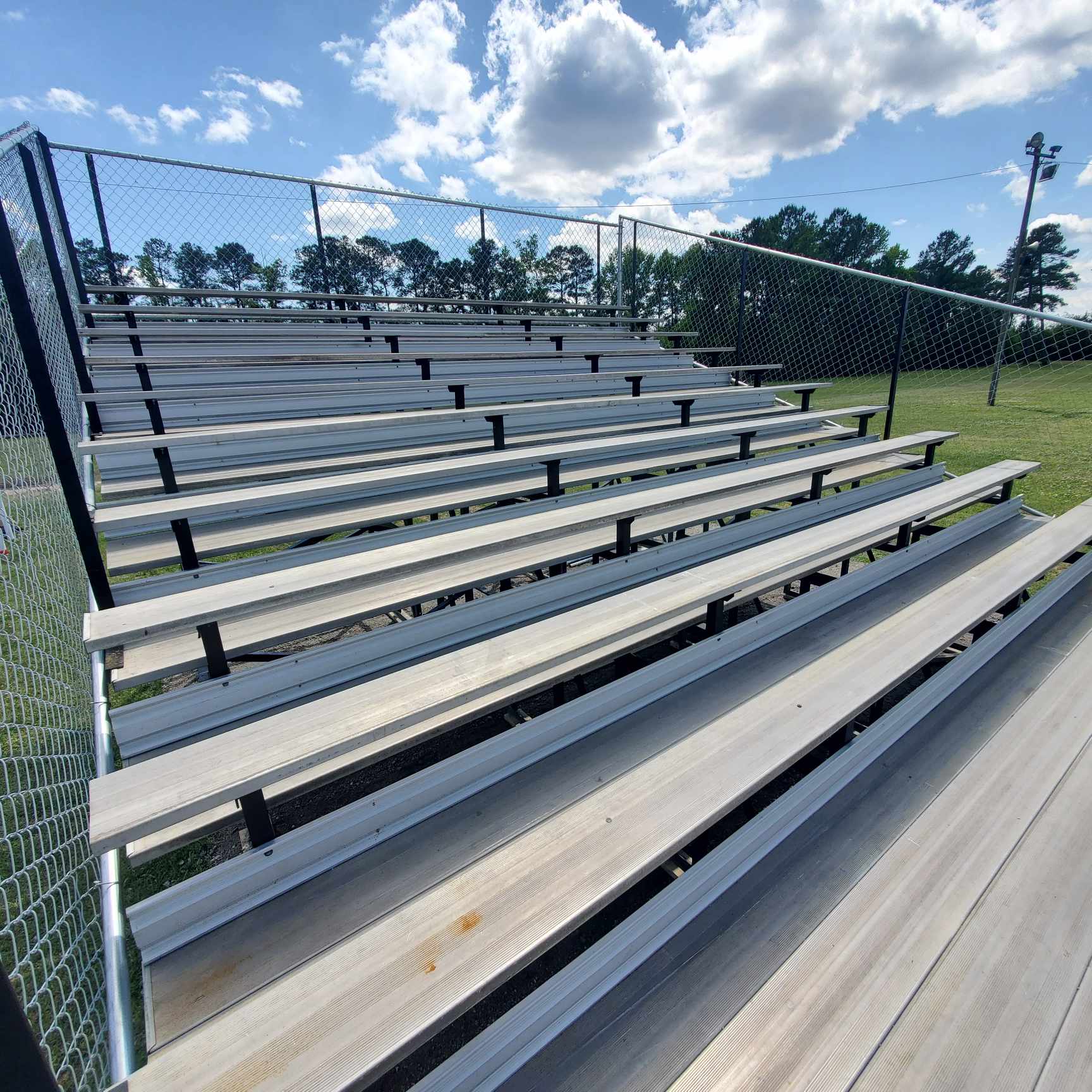
Bleachers are rarely late because of the aluminum. They are late because the approvals started too late. Plan backward from the day you need the seats.
The steps, in order
- Site and crowd. Confirm the capacity, rows and access the venue needs.
- Layout and quote. A layout for your site and a price at current metal costs.
- Approval and funding. Board vote, budget, bond or grant awards.
- Bid or purchase. If your agency bids it, the advertising and award period.
- Engineering and permit. Stamped structural drawings, foundation design and building department review.
- Fabrication. Seating and structure built to the drawings.
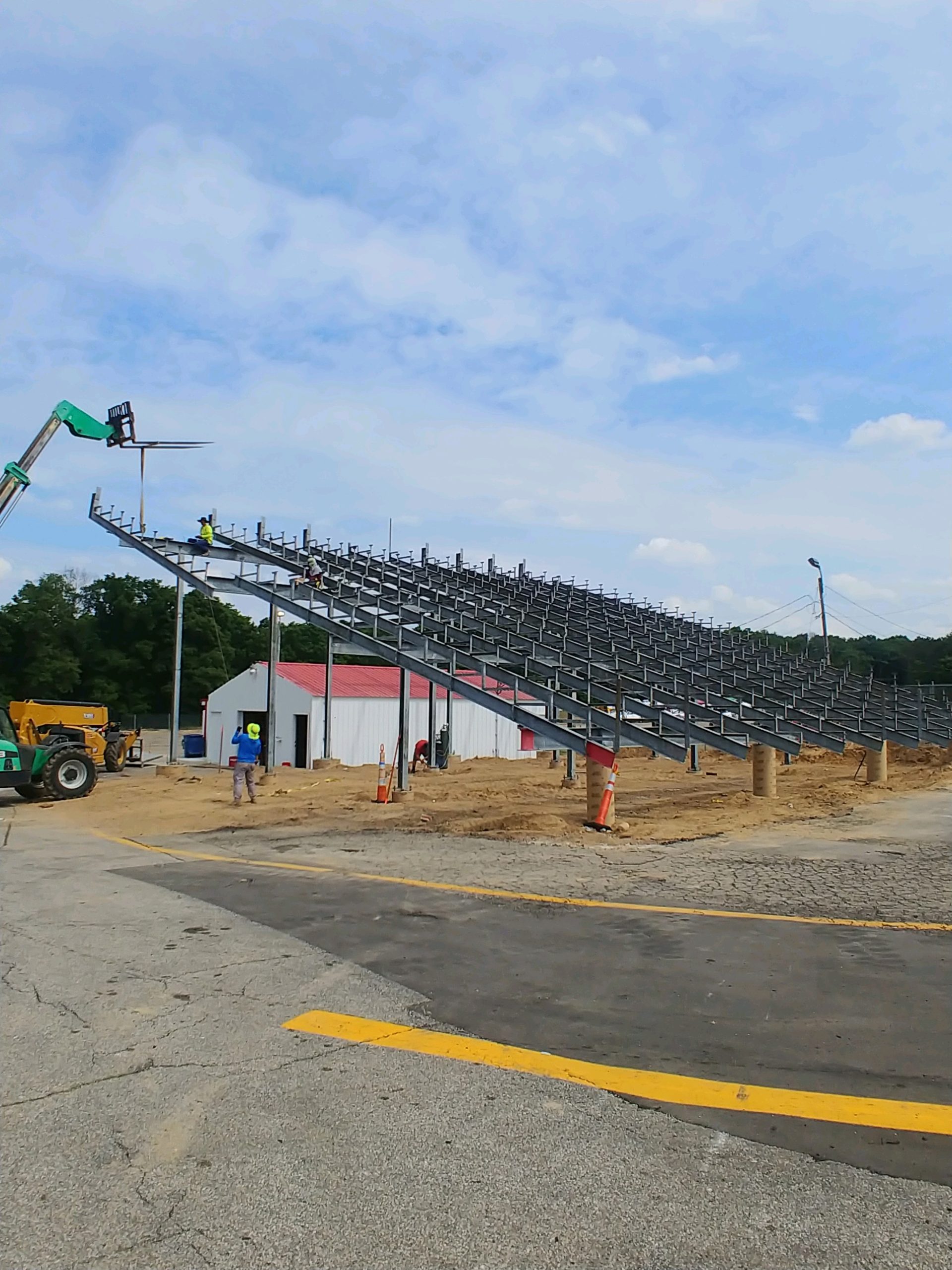
- Delivery and installation. Footings first, then frame, decking and rails.
- Final inspection and handoff. Punch list, inspection and a maintenance guide.
What makes a project take longer
- Elevated grandstands and press boxes, which need more engineering and review
- A public bid, with its advertising and award periods
- Permit review times at your building department
- Site work: grading, utilities and footings
- The season: installs cluster in summer for fall sports
Working back from opening day
For a fall season, many schools put approvals in place in winter or spring so the stand can go in over the summer. Race tracks do the reverse: build over the winter and open in the spring. Replanking and repairs on a sound frame can move faster than a new stand.
As a rule of thumb, bleachers up to about ten rows can be on site within weeks of drawings being approved. Elevated grandstands with press boxes typically run a season from first drawing to opening day, mostly in approvals and foundations.
Buying through a bid? See how public agencies buy bleachers. Lining up money? See bleacher funding and grants.
Start with a layout
Ask us for the current schedule for your size and site. Send us the site, the crowd and the date you need the seats.