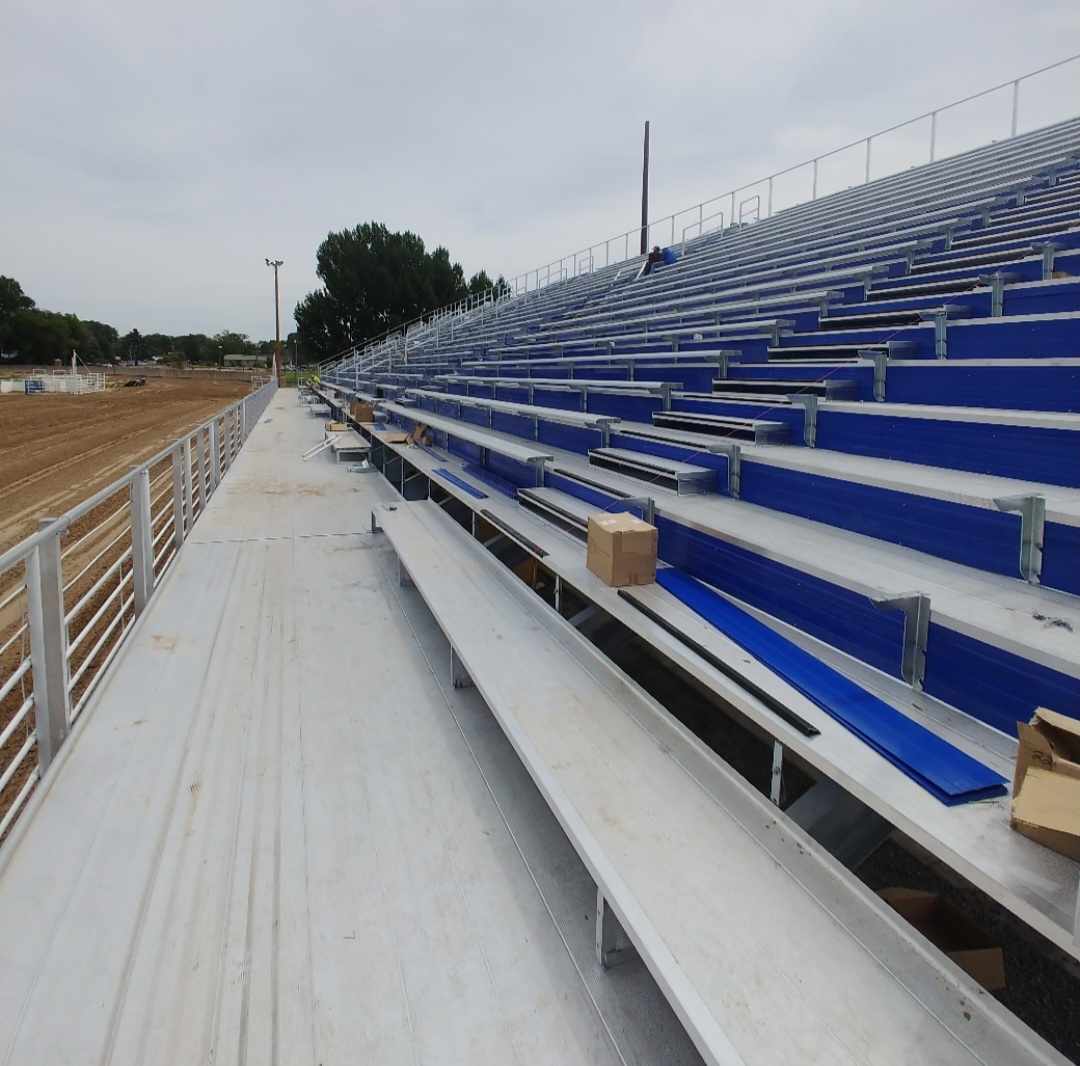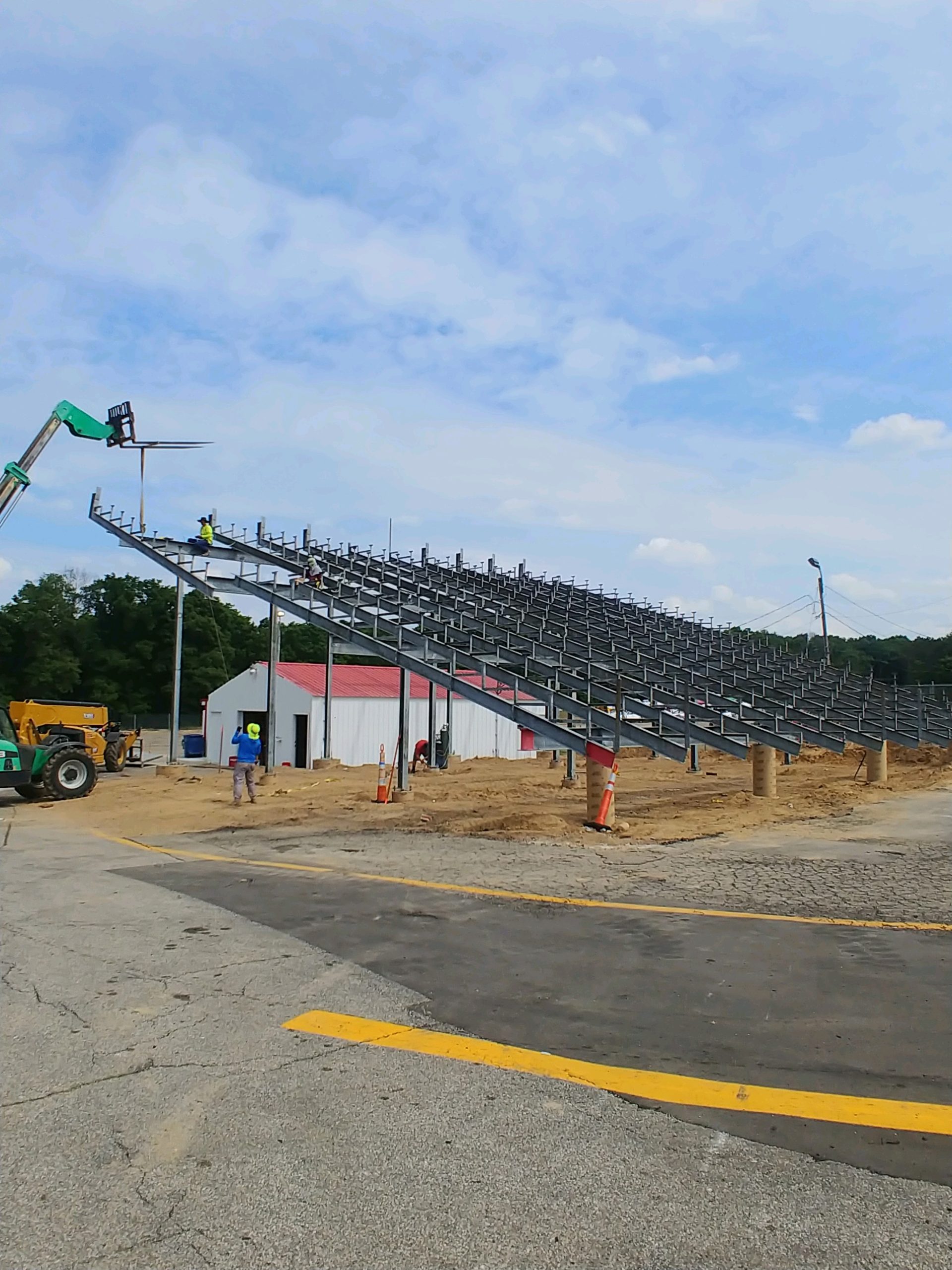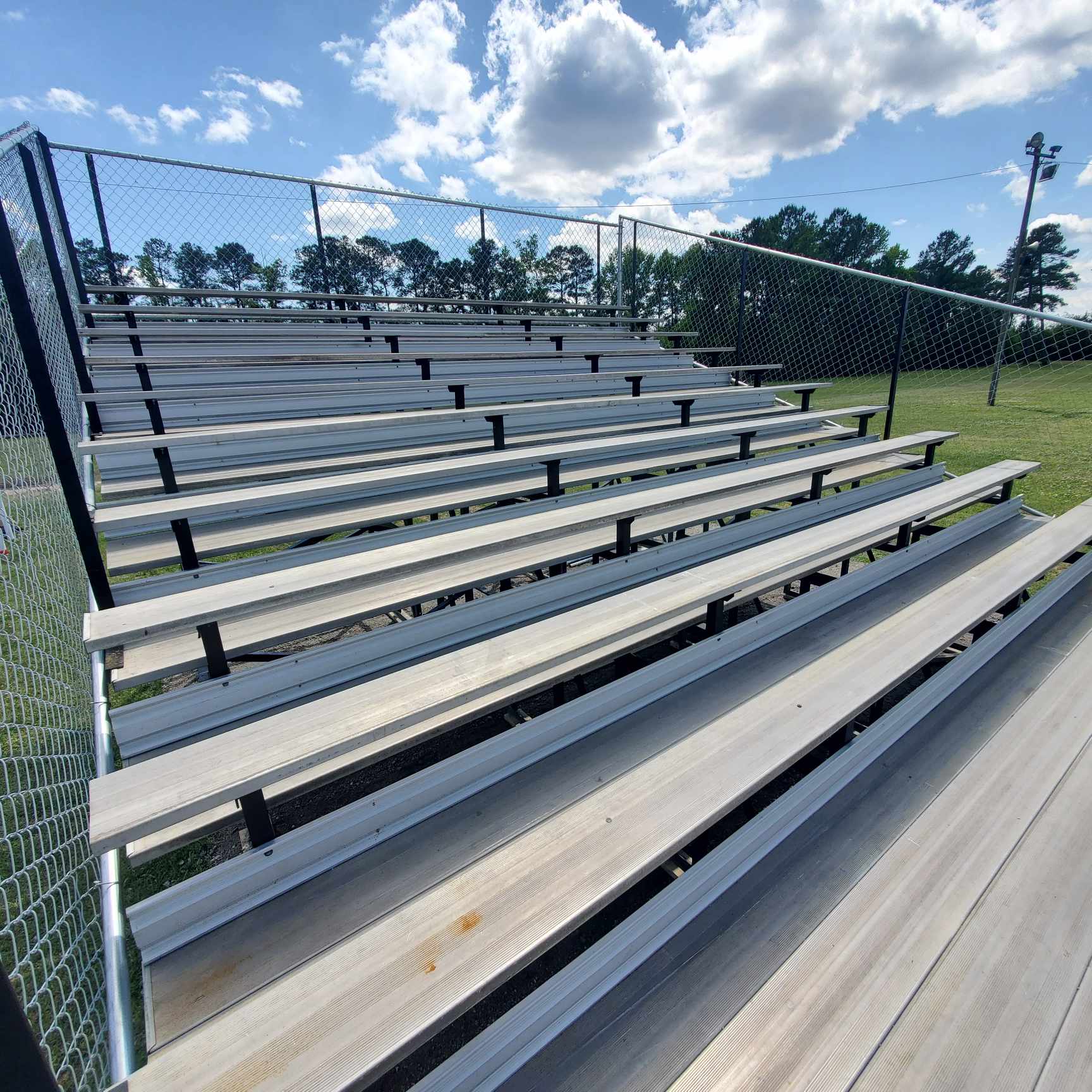
An empty portable bleacher is a big, light structure with a lot of surface for the wind to push on, and storms do tip unanchored bleachers over. Here is how to keep yours on the ground.
Why empty bleachers move
A crowd’s weight holds a bleacher down. Empty, it is mostly frame and planks, and wind on the seats and guards acts like a sail. Gusts can slide or overturn a unit that is not tied down.
Anchoring portable units
- Follow the manufacturer’s anchoring instructions for the unit and how exposed the site is
- Anchor to ground anchors, a concrete pad or a weighted base where the unit sits
- Tie units in a row together so they act as one
- Set the wheel locks on tip-and-roll units once they are in place
- When high winds are forecast, secure or move units before the storm, not during it
Permanent stands
Permanent stands are engineered for the wind speed the building code sets for the site, through ASCE 7. Canopies and press boxes add a lot of wind load, which is why they are designed with the stand, not added later. See bleacher shade and press boxes.
Check after a storm
Before anyone sits down, look for shifted anchors or footings, bent bracing, loose planks and damaged guards. The bleacher inspection checklist lists what to check.
Choosing between portable types? See tip-and-roll vs towable, or ask us about your site.