The first question on every bleacher project is the same: how many rows? The honest answer is that rows are the output, not the input. Start with the crowd you have to seat on your biggest day, work out how long the stand can be on your site, and the row count falls out of the arithmetic. Here is that arithmetic, or skip ahead to the bleacher capacity calculator.
Start with 18 inches
Building codes count bench seating at 18 inches of seat length per person, and so do we. A standard 15-foot section of bench is 180 inches long, which is ten seats per row. Everything else is multiplication:
| Stand | Seats per row | Rows | Planning capacity |
|---|---|---|---|
| 3 sections (45 ft) | 30 | 5 | 150 |
| 4 sections (60 ft) | 40 | 10 | 400 |
| 6 sections (90 ft) | 60 | 15 | 900 |
| 8 sections (120 ft) | 80 | 20 | 1,600 |
| 10 sections (150 ft) | 100 | 25 | 2,500 |
Those are planning numbers. Three things pull the final count down, and you want them in the plan from day one rather than discovered at the inspection.
- Aisles. Every aisle is seating you do not get. A 42-inch aisle through a 20-row stand costs you roughly two and a half seats per row, or about 50 seats. Bigger stands need more aisles, so the percentage lost grows with the crowd.
- Chairs. Stadium chairs are 19 to 22 inches wide, not 18. A reserved chair section seats 10 to 15 percent fewer people than the same length of bench.
- Accessible seating. Wheelchair spaces are 36 inches wide and need a companion seat beside them, and the 2010 ADA Standards say how many you need. On a 400-seat stand that is five spaces plus five companions, typically on the front walkway. How to count them.
Multiply 18-inch seats by rows, then take 10 percent off for aisles and accessible positions. If you are adding chair sections, take another 10 percent off those sections. That number is usually within a few seats of what the drawings produce.
Rows versus length
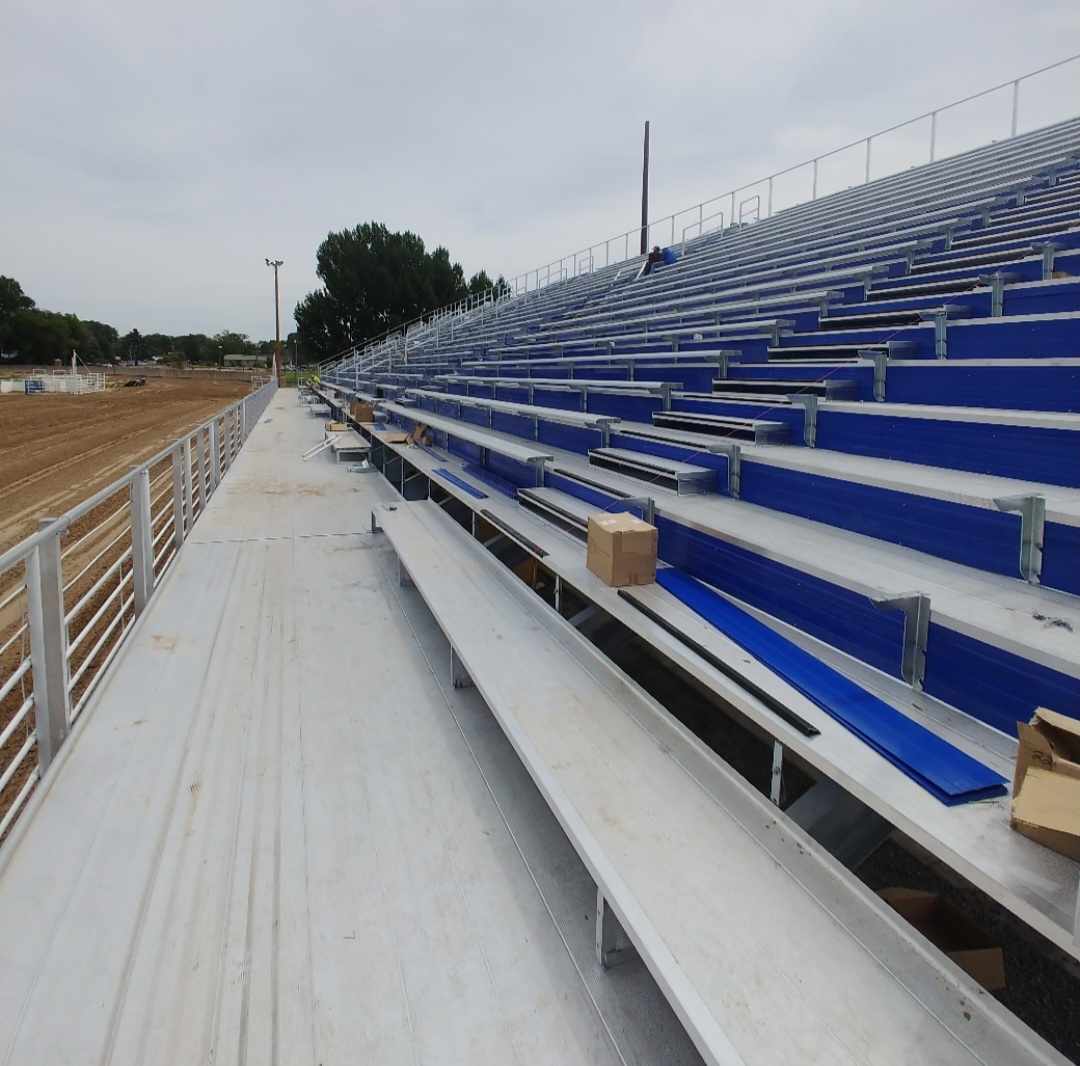
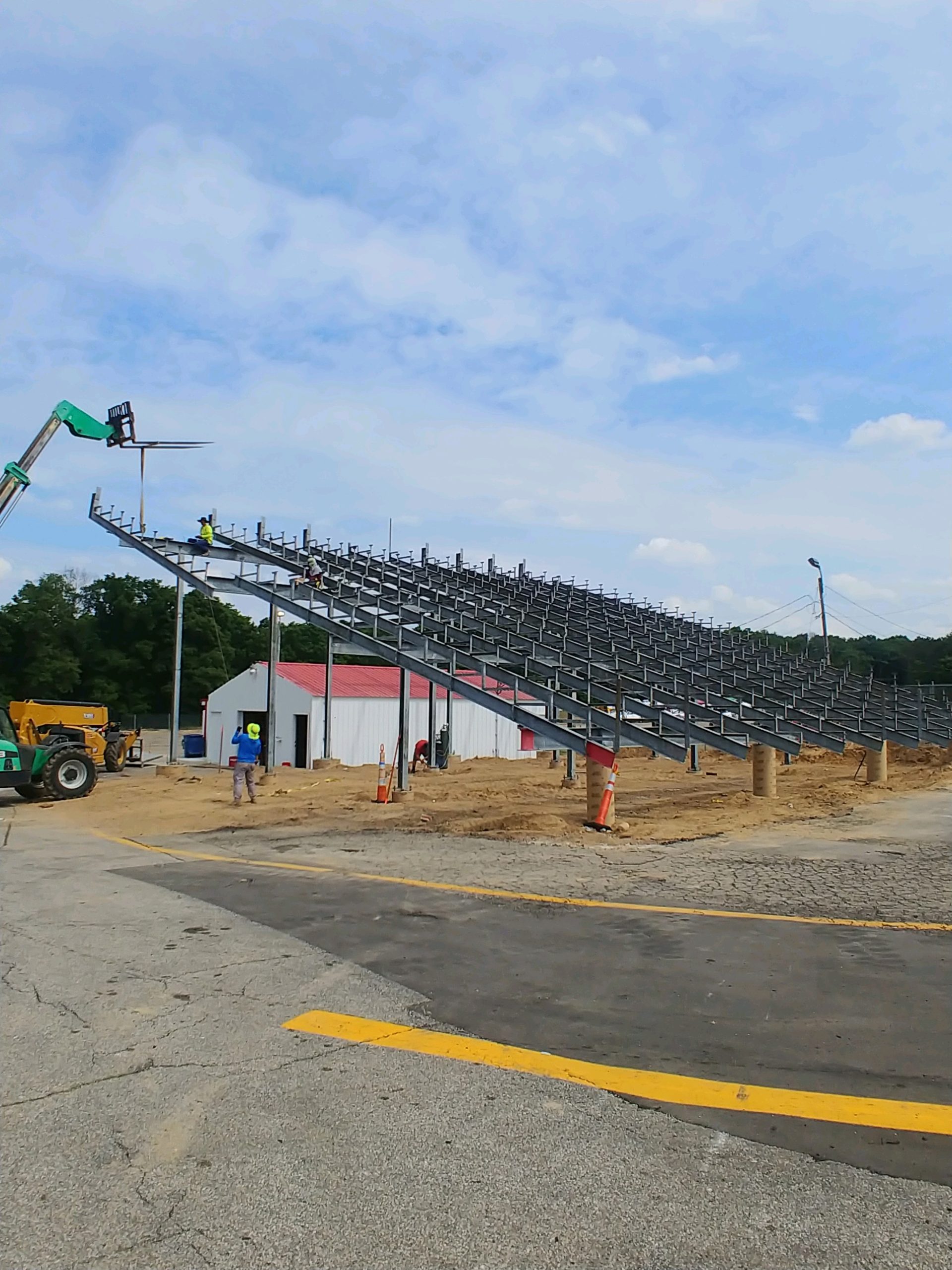
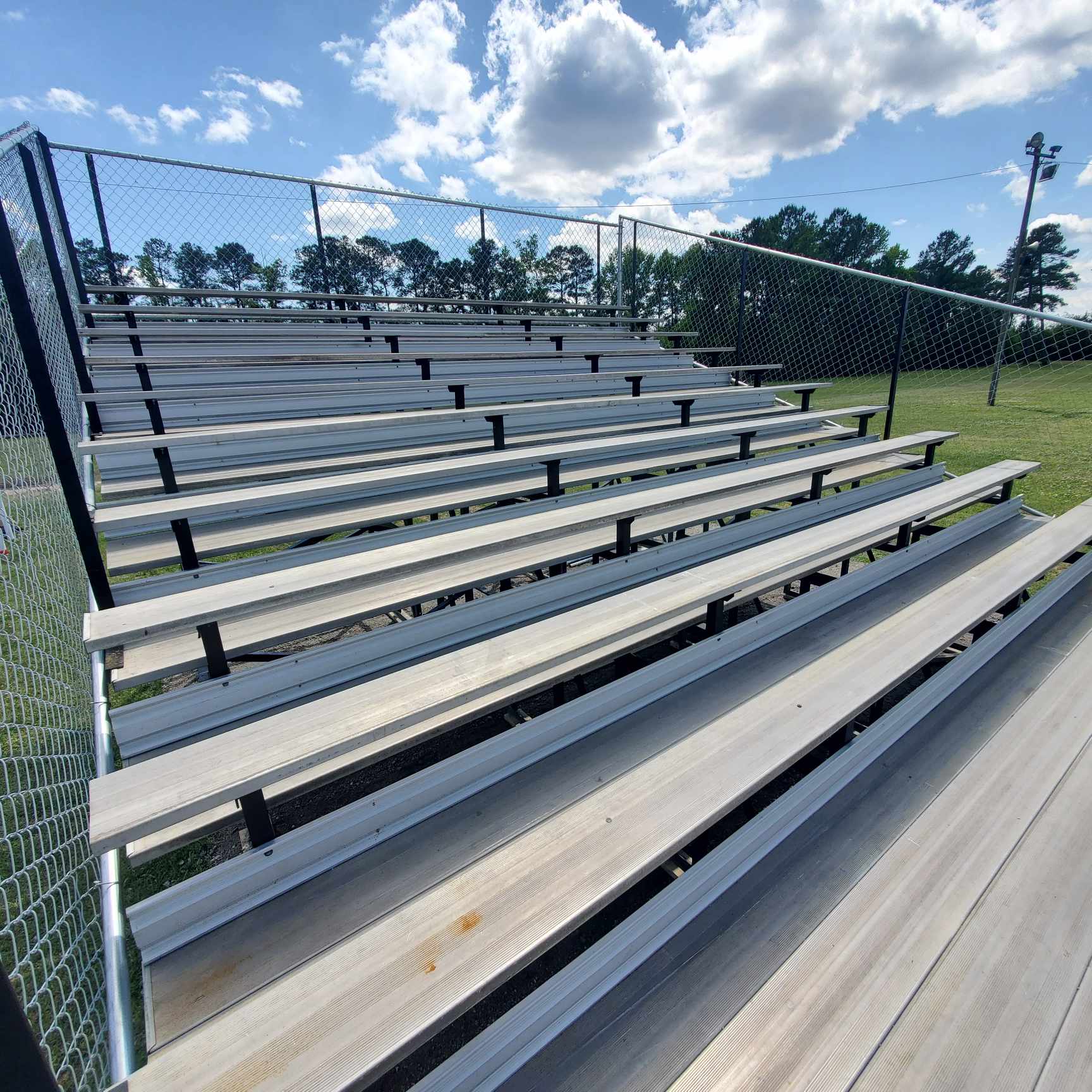
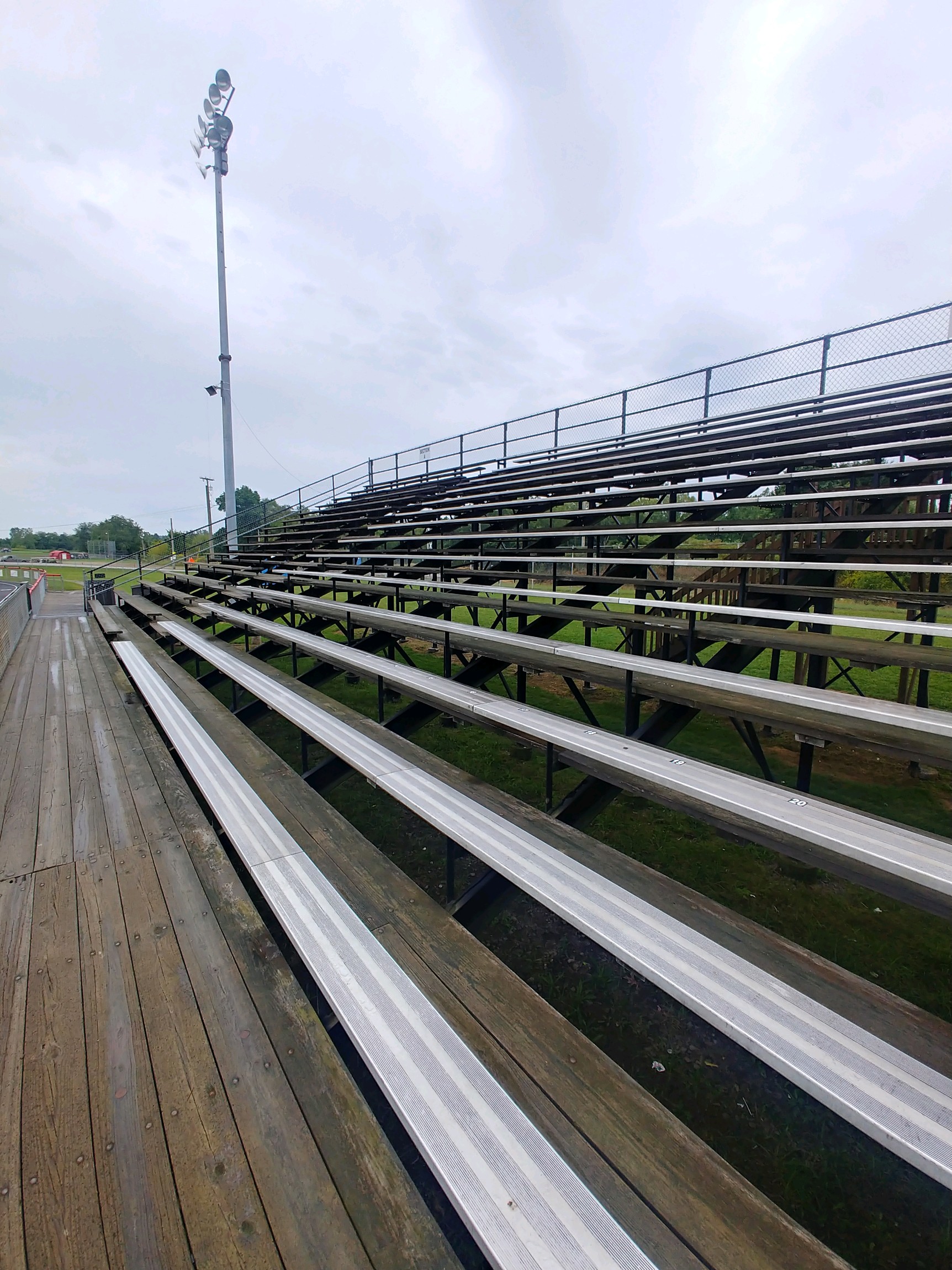
Two stands can seat 1,000 people: a 10-row stand 150 feet long, or a 25-row stand 60 feet long. They are very different objects. The long, low stand is a ground-level bleacher: cheaper per seat, quicker to install, no elevator question, but the far seats are a long way from the 50-yard line and the back row is only about eight feet up. The tall, short stand is a grandstand: everyone is close to the action and high enough to see the whole field, but now you are into elevated construction, a front walkway, stair towers, vomitories and engineered foundations.
Most venues land in between. A home side is usually 15 to 25 rows and as long as the budget allows; a visitor side is 5 to 10 rows. If your site is short on length (a track around the field, a parking lot behind the stand, a property line), rows are how you get the capacity back.
Why the pitch is not a style choice
The angle of a stand is set by sightlines, not by taste. Each row has to see over the heads in the row in front, which is why rows get steeper as they get further from the field. Designers measure this as the “C-value”: the vertical clearance between your sightline and the top of the head in front of you. Two and a half to three and a half inches is comfortable; less than that and people are leaning around each other all game.
For a bench bleacher at 24-inch row spacing and about an 8-inch rise, sightlines work out for a ground-level stand of up to 10 or 15 rows looking at a field at the same grade. Go taller, or put the stand behind a fence, a dugout or a track wall, and the front rows start losing the near side of the action. That is the point where an elevated grandstand earns its keep: the first row sits at walkway height, four to eight feet up, and everyone behind it sees over whatever is in front.
The question we ask back
Before we talk rows, we ask three things: what is the biggest crowd you expect in the next ten years, what is between the stand and the field (fence, track, dugout, wall), and how much length do you actually have? Send us those and we will come back with a row count, a section drawing and a capacity schedule you can take to your board. Or rough it in yourself first with the configurator.