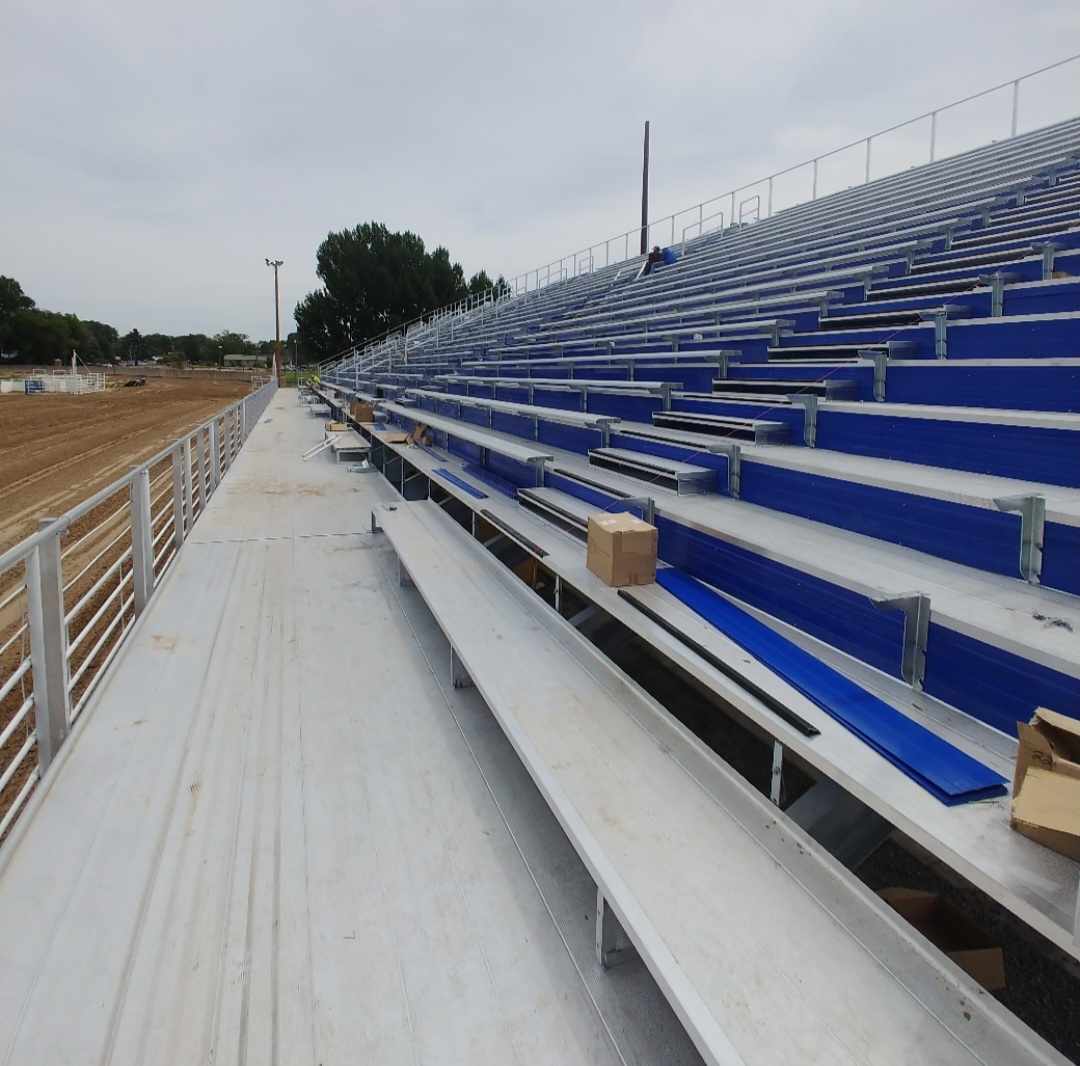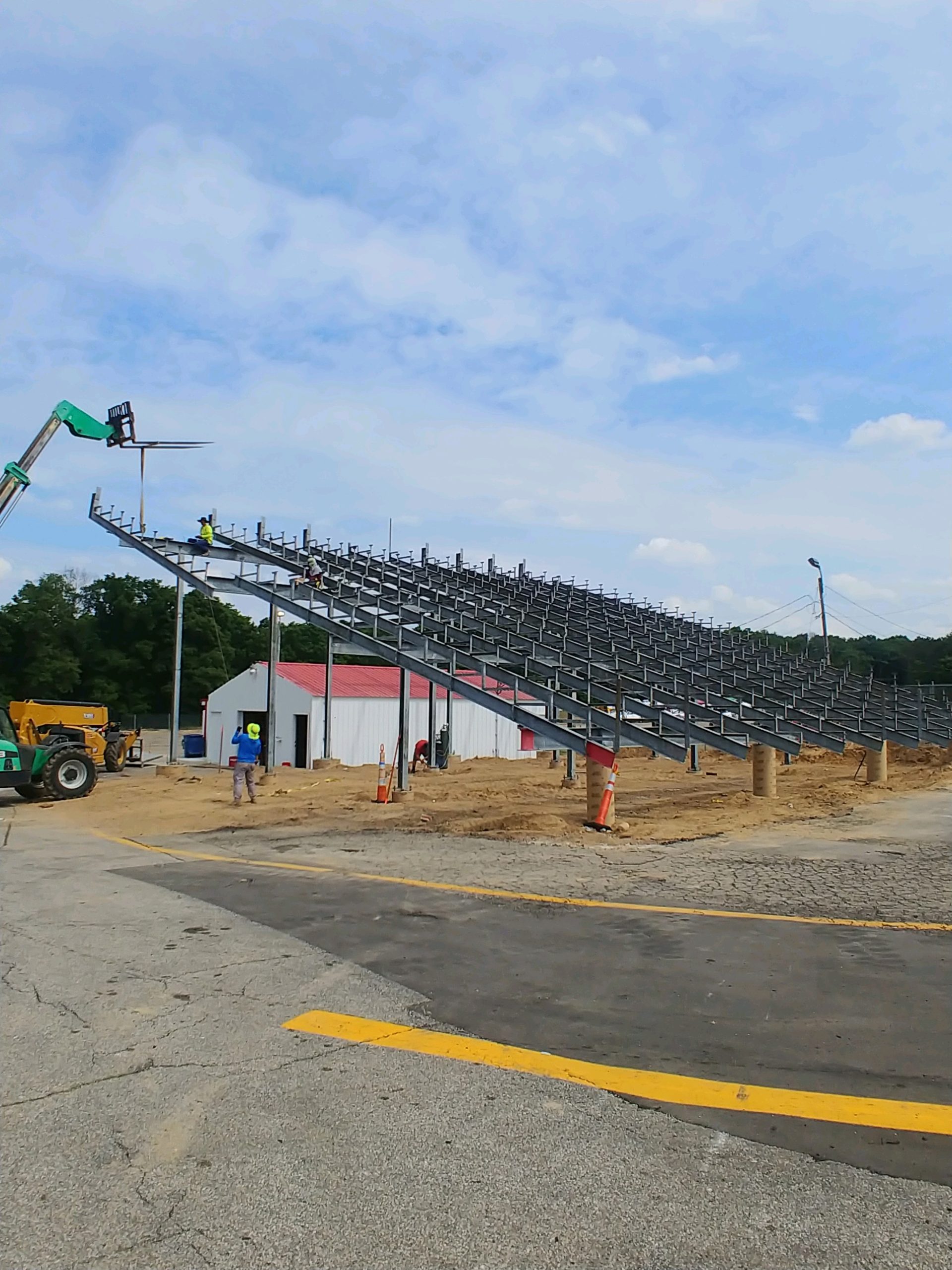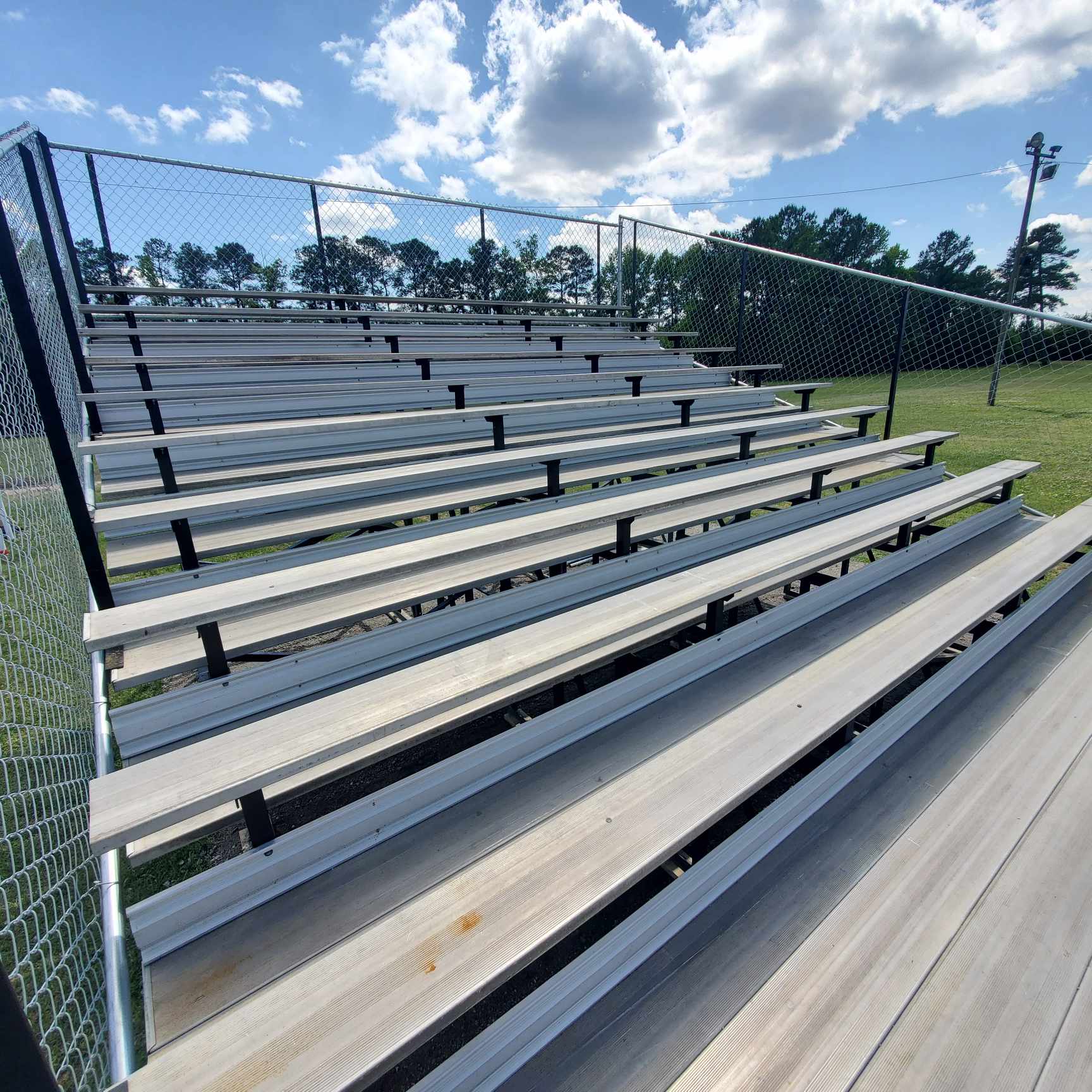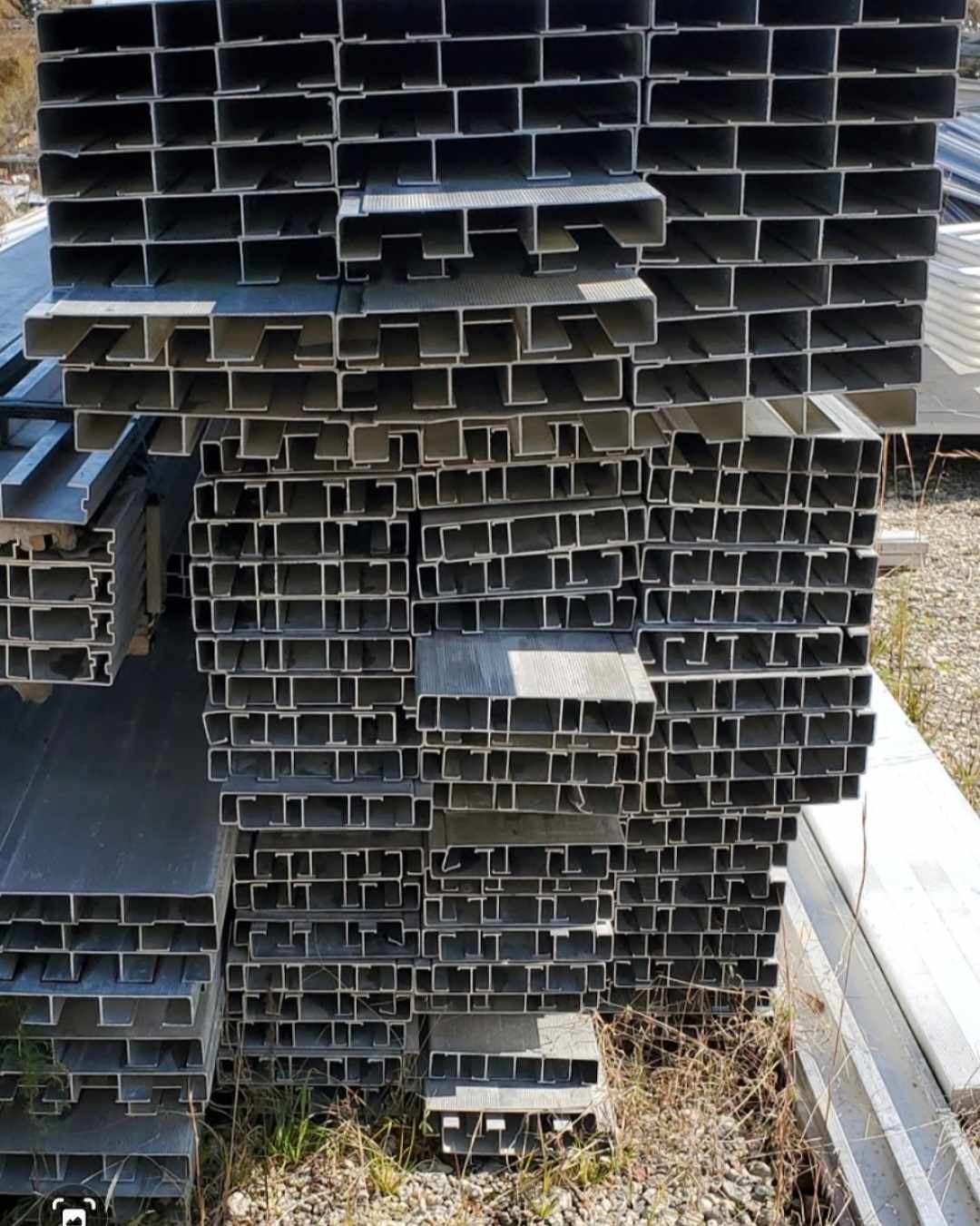
Old bleachers are rarely worthless. The aluminum keeps its value, and a sound frame can carry new planks for years. Before you pay to haul a stand away, look at all four ways out.
1. Renovate it in place
If the frame and footings are sound, new planks and a safety retrofit (guards and riser closures to current rules) put the stand back in service for a fraction of the cost of a new one. It is usually the cheapest option when the stand still fits the crowd. See bleacher renovation and when to replank and when to replace.
2. Relocate it
A stand that is too small for the stadium can be the right size for a practice field, a softball diamond or a park. Taking it down, moving it and putting it back up on new footings costs money, but less than buying the same seats new, as long as the frame is sound and the stand can be brought up to code at the new site.
3. Sell it or trade it in
Aluminum seating holds its value. When a school or venue replaces a stand, the old one can be sold to someone who needs seats, or taken down and credited against the new stand. We do both: stands past saving are removed and credited against a new one, and good aluminum goes into our repurposed aluminum program, where it is inspected, refurbished and re-engineered for its next site.
Public schools and agencies usually have to follow surplus-property rules to sell or trade equipment. Check with your purchasing office before you promise the stand to anyone. If you are on the buying side, buying used bleachers covers what to check before you pay for a stand.
4. Scrap it
When nothing else works, aluminum is one of the most recyclable metals there is, and scrap yards buy it. Steel frames are recycled too. Scrap value may not cover the cost of removal on its own, so get the take-down price first.
What removal involves
- A crew, a lift and trucks: stands come down in the reverse order they went up.
- Footings: anchor bolts cut flush or footings removed and the ground restored, depending on what comes next.
- Utilities: power and data to a press box disconnected by an electrician.
- Permits: some jurisdictions want a demolition permit for a large stand.
- Timing: plan removal around the season and the new stand’s delivery, so the field is without seats for as little time as possible.
How to decide
| What you have | What usually makes sense |
|---|---|
| Sound frame, worn planks, right size | Renovate in place |
| Sound frame, wrong size for this field | Relocate it to a field it fits |
| Replacing it anyway, aluminum in good shape | Trade it in or sell it |
| Cracked welds, section loss, failed footings | Remove it and recycle the metal |
Not sure which one your stand is? Send us photos of the frame, the planks and the guards and we will tell you what we see.