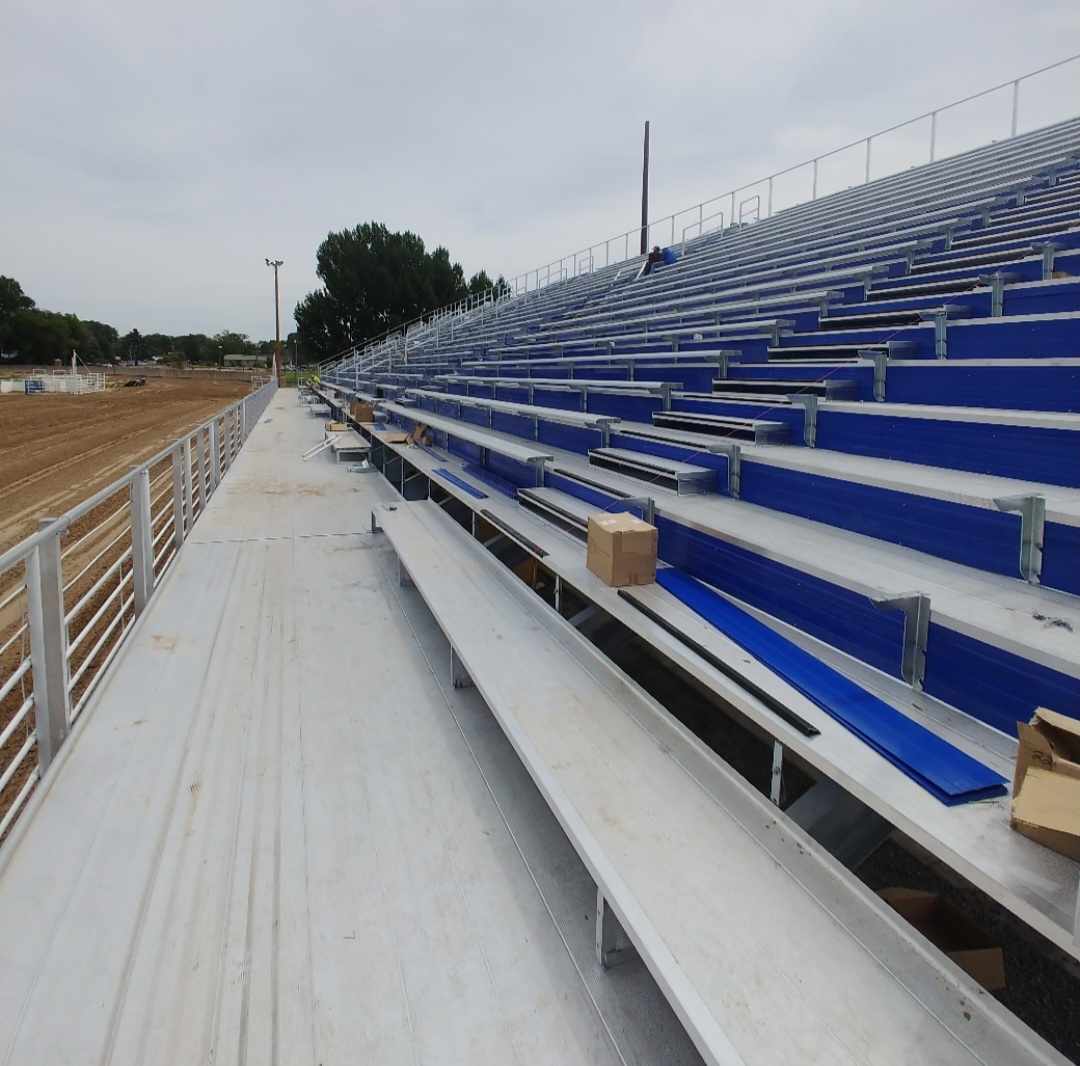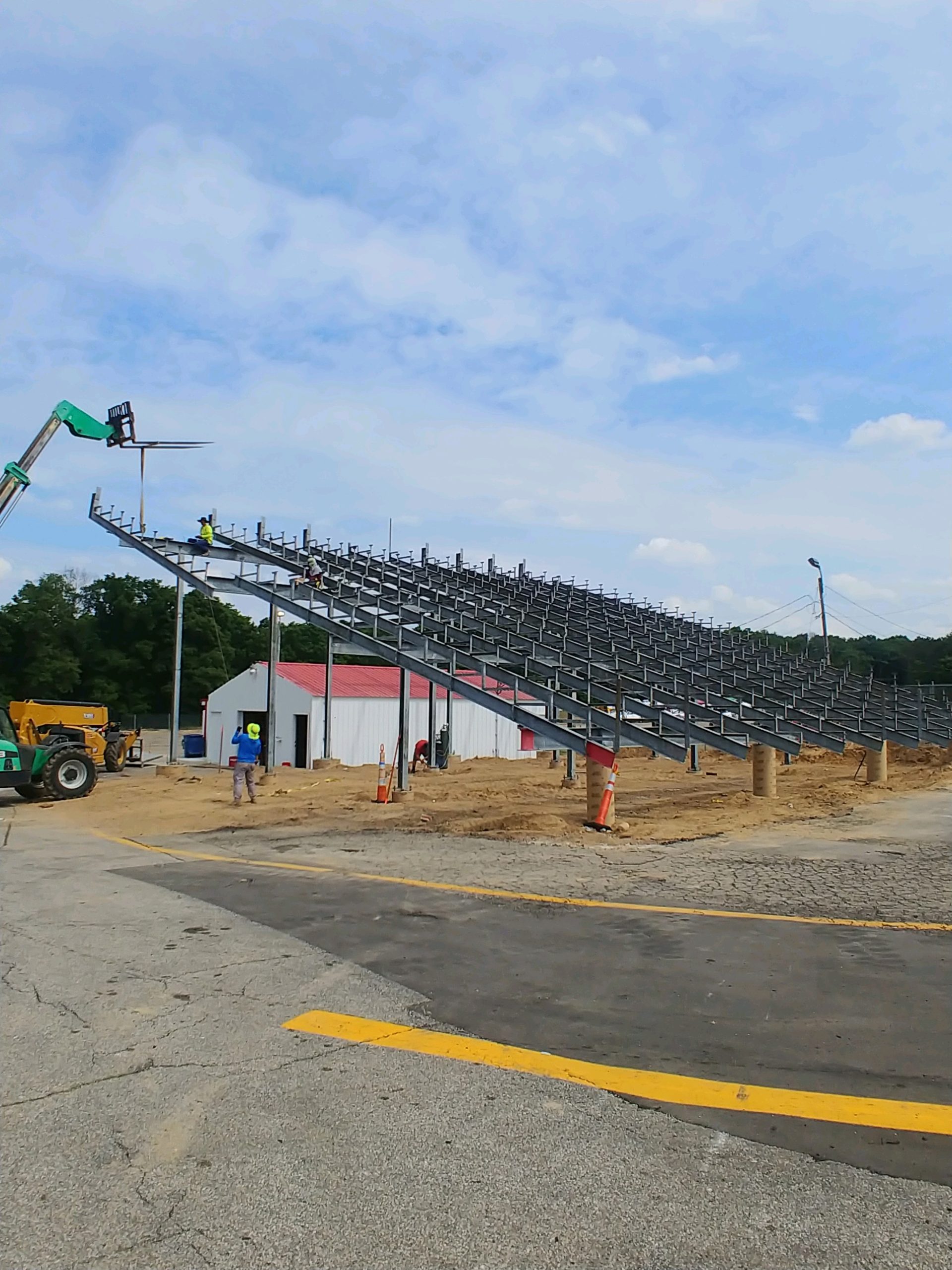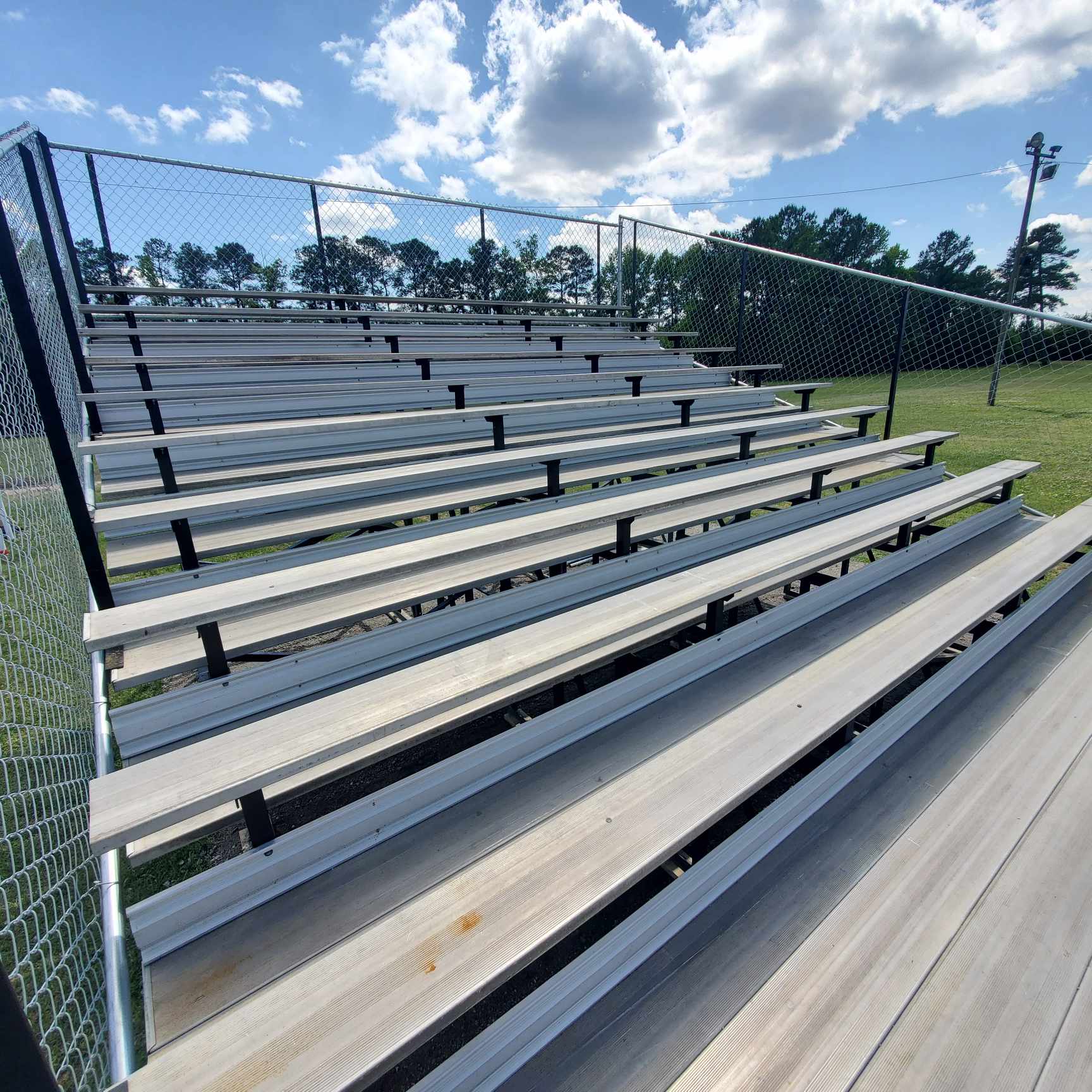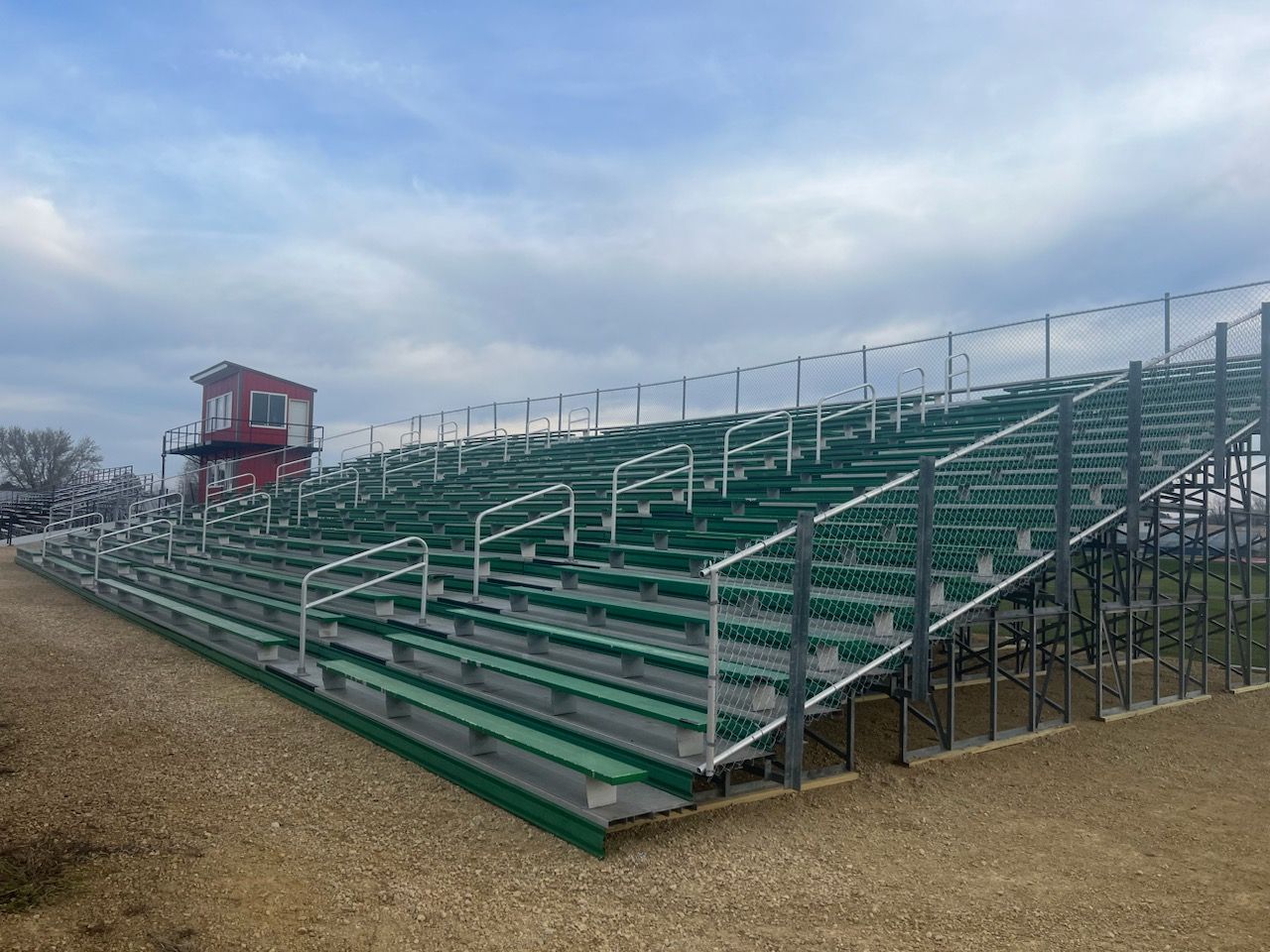
Three materials show up in outdoor spectator seating: concrete, steel and aluminum. Older stadiums lean on concrete, older bleachers on wood and painted steel. Most new outdoor stands are a combination: aluminum seating and decking on an aluminum or galvanized steel frame.
Here is what each material does well, what it costs you over the life of the stand, and where each one belongs.
Concrete
Concrete stands are cast in place or built from precast seating units on a structural frame or an earth berm. They feel permanent because they are.
Where it works: stadium bowls built into a hillside or berm, very large permanent venues, and places where the seating is part of a building.
What it costs you:
- Weight. Concrete is heavy, so foundations are big and the structure under a raised stand is substantial.
- Upkeep. Concrete cracks and spalls, joints need resealing, and in freeze-thaw climates water in those cracks does damage every winter. Reinforcing steel that gets wet can rust and push the concrete apart.
- Flexibility. Adding rows, changing aisles or moving a concrete stand is a construction project of its own.
- Seating still has to go on top. Most concrete stands get aluminum benches or chairs mounted to the treads anyway.
Steel
Steel is strong and stiff, which is why it carries the big loads under elevated grandstands: columns, beams and bracing.
Painted steel looks good until the paint fails, and then it rusts. Older stands with painted steel planks or frames need repainting on a schedule, and rust at the base plates and connections is a common reason they are retired.
Hot-dip galvanized steel is a different story. The zinc coating protects the steel for a long time: the American Galvanizers Association estimates 70 to 90 or more years to first maintenance for a typical coating in an industrial atmosphere, and longer in milder ones. That is why we galvanize structural steel to ASTM A123 for columns and bracing.
Steel seat and foot planks are a weaker choice. Once the coating wears through on the walking and sitting surfaces, they rust.
Aluminum
Aluminum does not rust, does not need paint, and does not splinter, rot or attract termites. It is also light: about a third the weight of steel for the same volume.
What that buys you:
- Lighter foundations and faster installation, because the structure carries less of its own weight.
- Low upkeep. Seat planks are usually clear-anodized; footboards can be left mill-finish. Cleaning and a yearly hardware check are most of the maintenance.
- Flexibility. Aluminum stands can be extended, re-planked or taken down and moved.
- A second life. Aluminum can be refurbished and reused, which is the idea behind repurposed aluminum.
What to watch: aluminum costs more per pound than steel, it can dent under impact, and where it touches bare steel the two metals need to be isolated or the contact will corrode. Good details use galvanized or stainless hardware throughout.
Side by side
| Concrete | Painted steel | Galvanized steel | Aluminum | |
|---|---|---|---|---|
| Weight | Heaviest | Heavy | Heavy | Lightest |
| Foundations | Largest | Large | Large | Smallest |
| Upkeep | Crack and joint repair | Repainting, rust repair | Low | Low |
| Change or relocate | Very hard | Possible | Possible | Easiest |
| Best use | Built-in stadium bowls | Older stands | Understructure of elevated stands | Seating, decking and frames |
The usual answer: both
Most of what we build is a hybrid. Ground-level bleachers use aluminum frames, seats and decking end to end. Elevated and stadium grandstands put aluminum seating and decking on a galvanized steel understructure, which carries the height and the loads while everything people touch stays aluminum. Our GB Series shows which structure goes with which size of stand.
If you are weighing materials because of budget, our guide to what drives the cost of a grandstand explains where the money actually goes. If you have an old stand to deal with first, new or repurposed aluminum covers the options.
Have a site and a crowd in mind? Start a project and we will tell you what fits.