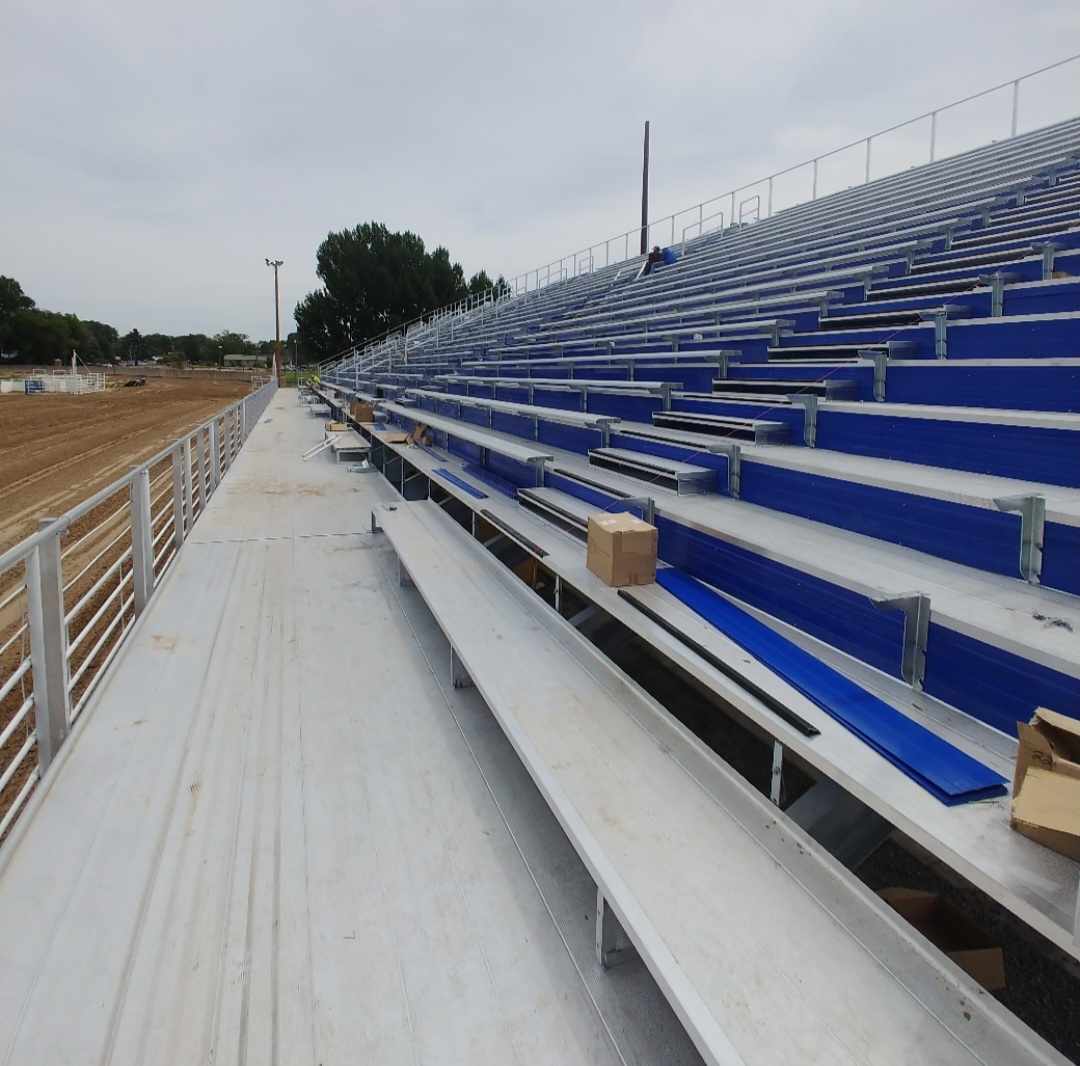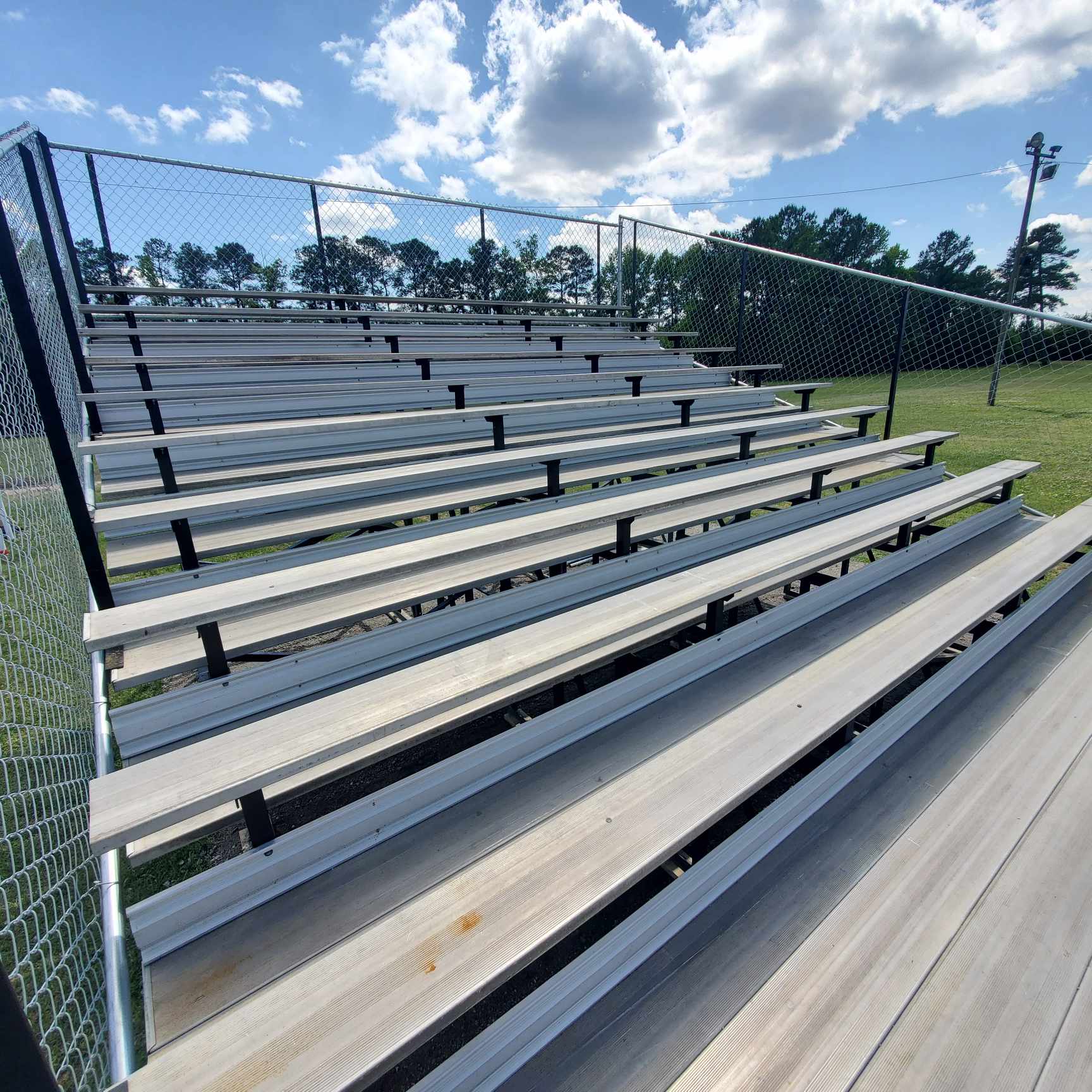
Aluminum does not wear out the way wood and steel do. It does not rust, it does not rot, and a plank from a stand built thirty years ago is structurally the same plank today. That is the basis of our repurposed program: seating systems from facilities that closed, downsized or upgraded, inspected, refurbished and re-engineered into a new stand. Here is when that is the smarter buy, and when it is not.
What “repurposed” means here
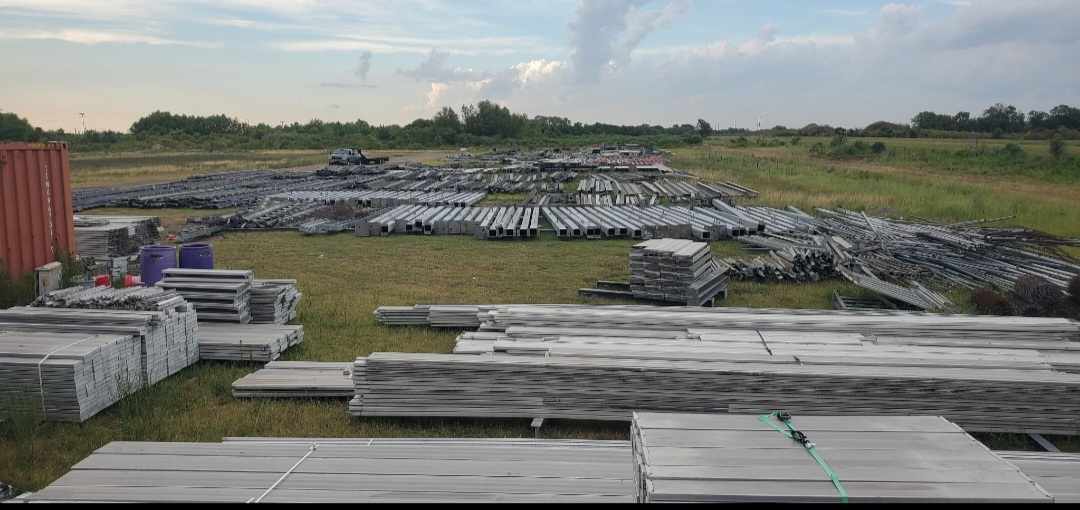
- Sourcing. We buy aluminum seating from schools, parks, tracks and venues that are replacing or removing it, and from our own take-downs.
- Sorting. Every plank, riser, footboard and rail is inspected. Anything cracked, bent, badly worn or below current standard is recycled, not reused.
- Refurbishing. Planks are cleaned and re-finished or powder-coated in your colors. Fasteners, clips, brackets and guards are replaced new.
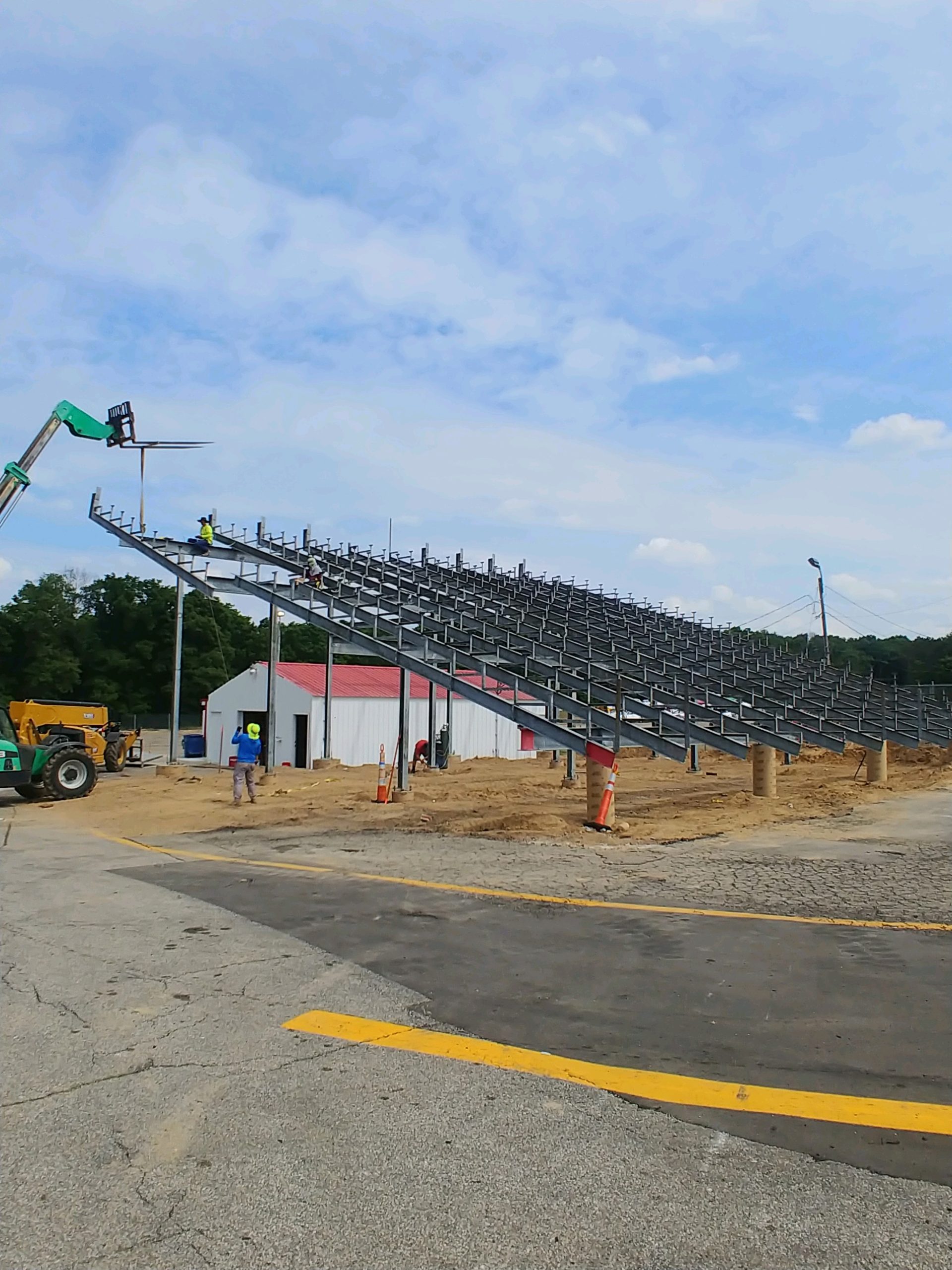
- Re-engineering. The stand is drawn and engineered for your site exactly as a new one would be. Frames are reconfigured, galvanized steel is added where the new layout needs it, and guards, closures and accessible seating are brought to current code.
- Installation. To the same stamped drawings, with the same permit and the same inspection as new.
When it is the smarter buy
- Budget. Repurposed seating comes in at a fraction of the cost of new, with the same engineering and the same code compliance. For a visitor side, a practice field, a park complex or a secondary venue, it is often the difference between building this year and waiting.
- Procurement. Municipalities and districts with green-purchasing policies can point to a line item that keeps aluminum in circulation.
- Schedule. Inventory is on the ground, so a repurposed bleacher can sometimes beat a new one to the site.
- Sustainability. Repurposing aluminum takes about 95 percent less energy than producing it new from ore. Every reused plank is one that did not have to be smelted.
When to buy new
- You want a specific profile or finish that is not in inventory: a particular plank section, chair model or anodized color.
- A very large or complex stand. Stadium grandstands with suites and concourses are built new, though their bench sections can come from inventory.
- Matching an existing stand exactly, where the owner wants identical sections side by side.
What we check before a plank goes back on a stand
| Component | What we look for | Outcome |
|---|---|---|
| Seat and foot planks | Cracks, deflection, end damage, wall thickness | Reuse, re-finish or recycle |
| Risers and closures | Fit to current 4-inch rule | Reuse or replace new |
| Frames and stringers | Welds, bends, corrosion at steel contact | Reuse, re-engineer or recycle |
| Guards and handrails | Height, openings, attachment | Replace new in nearly every case |
| Fasteners and clips | All of them | Replace new |
| Steel understructure | Galvanizing, section loss | Replace new where in doubt |
Same stand, same standard
A repurposed stand is engineered, permitted and inspected exactly like a new one. The difference is where the aluminum came from, not what it has to do.
Ask for a repurposed option on any quote and we will price both. More on the program, or start a project.